Surname List
Name Index
Sources
Email Us
HUGH DE AUDLEY (or ALDITHLEY7), Knt., of Stratton (in Stratton Audley), Oxfordshire, Raunds, Northamptonshire, and Bradwell and Chesterton (both in Wolstanton), Gratton, and Mere, Staffordshire, Justice of North Wales, steward of the king's household, Constable of Montgomery castle, younger son ofJames de Audley, of Aldithley and Heleigh, Staffordshire, by Ela, daughter of William Longespée, Knt. (grandson of King Henry II) [see AUDLEY 5 for his ancestry]. They had two sons, James and Hugh, Knt. [Earl of Gloucester], and one daughter, Alice. He took part in the Scottish and French wars of King Edward I. He was taken prisoner in Gascony in 1299. In 1301 they had a grant of one-third of the manor of Great Marcle, Herefordshire. He had a grant of free warren at Eastington in 1318. He was summoned to Parliament in 1321. He joined Thomas of Lancaster's rebellion in 1322, but surrendered before the Battle of Boroughbridge. SIR HUGH DE AUDLEY, Lord Audley, died while a prisoner in Wallingford castle shortly before 1 April 1325. In 1337 his widow, Iseult, endowed a chantry in the church of Eastington, Gloucestersbire. She died testate shortly before 4 August 1338. Parents: James de AUDLEY Knight and Ela LONGESPEE.
Spouse: Iseult de MORTIMER. Lord Hugh de AUDLEY Knight and Iseult de MORTIMER were married before 1292 in Wigmore, Hereford, England.6,155 Children were: Hugh de AUDLEY Earl of Gloucester.
Hugh de AUDLEY Earl of Gloucester6,46,156 was born about 1289 in , , , England.156 He died on 10 Nov 1347 in Tonbridge, Kent, England.156 He was buried in , Priory of Tunbridge, Kent, England.
HUGH DE AUDLEY, Knt., of Stratton (in Stratton Audley), Oxfordshire, and Gratton, Staffordshire, King's bachelor, Sheriff of Rutland, 2nd son, born about 1289. He married at Windsor, Berkshire 28 April 1317 MARGARET DE CLARE, widow of Peter de Gavaston, Knt., Earl of Cornwall, Lord of the Isle of Wight, Baron of Wa]lingford, Berkshire, Trematon and Launceston, Cornwall, Beckley, Oxfordshire, and Burstwick and Knaresborough, Yorkshire (beheaded 19 June 1312), and 2nd daughter of Gilbert de Clare, Knt., Earl of Gloucester and Hertford, by his 2nd wife, Joan of England, daughter of King Edward I [see MONTAGU 6 for her ancestry]. She was born say 1292-3 (aged variously 18, 20, 21, 22 in 1314). They had one daughter, Margaret. She was co-heiress in 1314 to her brother, Gilbert de Clare, Knt., Earl of Gloucester and Hertford, by which she inherited the Castle, borough, and lordship of Newport, and manors of Wentlloog and Machen, Monmouthshire, the Castle and manor of Tonbridge, Kent, and manors in many other counties, including Chipping Ongar, Essex, Campden and Thornbury, Gloucestersbire, Naseby, Rothwell, and ston, Northamptonshire, Rotherhithe, Surrey, etc. During his father's lifetime, he was summoned to Parliament from 30 Nov. 1317 to 15 May 1321, by writs directed Httgotzi Da.etdelejuniori, whereby he may be held to have become Lord Audley. In Dec. 1318 they surrendered the lordships of Newport, Wentloog, and Machen to Hugh le Despenser, in exchange for 6 manors in England, with other properties. In 1319 Parliament rejected a petition by Hugh and Margaret for restoration of the lands of her late husband, Peter de Gavaston. He was involved with his father in the insurrection of 1321-2. He fought on the side of the Earl of Lancaster at the Battle of Boroughbridge 17 March 1321/2, where he was taken prisoner. His wife, Margaret, was sent to Sempringham Priory, where she was not allowed to go outside the gates. In 1325 he was transferred from Berkhampstead, where he was in prison, to Nottingham Castle, whence he escaped. Following the execution of the Despensers and the deposition of King Edward II, he was summoned to Parliament from 3 Dec. 1326 to 24 August 1336, by writs directed Hugoni de Attclele. In 1331 he was one of the embassy to France which concluded a treaty about Guienne. In 1332 he was about to cross the seas on the King's service. In 1333 he was about to go beyond seas on a pilgrimage. In 1334 he received a papal indult for plenary remission. He was appointed Guardian of the coast of Essex in May 1336. He was in the King's service in Scotland in 1336. He was created Earl of Gloucester 16 March 1336/7. In Nov. 1357 he was appointed one of the Captains of the army against Scotland, and he took part in the siege of Dunbar. He was one of the Marshals of the English host in Flanders in 1339. He was present at the Battle of Sluys in 1340. In 1341 he was beyond seas to make a treaty of peace with the King of France. His wife, Margaret, died 9 April 1342, and was buried at Queenhithe. In July 1342 he was about to set out for Brittany. SIR HUGH DE AUDLEY, Earl of Gloucester, died 10 Nov. 1347, and was buried at Tonbridge Priory, Kent. Parents: Lord Hugh de AUDLEY Knight and Iseult de MORTIMER.
Spouse: Margaret de CLARE. Hugh de AUDLEY Earl of Gloucester and Margaret de CLARE were married on 28 Apr 1317 in , Windsor, Berkshire, England. Children were: Alice AUDLEY, Margaret de AUDLEY.
James de AUDLEY Knight.6
Spouse: Ela LONGESPEE. Children were: Lord Hugh de AUDLEY Knight.
Margaret de AUDLEY6,46 was born about 1325 in , , , England.157 She died on 16 Sep 1348 in Tonbridge, Kent, England.157 She was buried in Priory, Tunbridge, Kent, England.
Ancestral Roots line 9 reads: "31. MARGARET DE AUDLEY, age 18 yrs. bef. 16 Edward III (1343), only dau. and heir; d. 7 Sep. 1349; m. bef. 6 Jul. 1336, SIR RALPH DE STAFFORD, K.G. (55-32), d. Tunbridge Castle, 31 Aug. 1372, M.P. 1337-1349, Baron of Tunbridge, Steward of the Royal Household, 1337, Seneschal of Aquitaine, 1345, fought at Crecy, cr. Earl of Stafford, 5 Mar. 1350/1, K.G., 23 Apr. 1349, son of Edmund de Stafford and MARGARET BASSET (55-31). (CP V 736, XI 101, XII pt. 1 174-177; Banks I 408-411; DNB 53:458)" Parents: Hugh de AUDLEY Earl of Gloucester and Margaret de CLARE.
Spouse: Ralph de STAFFORD Baron. Ralph de STAFFORD Baron and Margaret de AUDLEY were married before 6 Jul 1336 in , , , England.157 Children were: Beatrice de STAFFORD.
Charles "Martel" Mayor of The Palace of AUSTRASIA46,158,159 was born in 676 in of, Heristal, , Neustria.160 He died on 15 Oct 741 in Cressy Sur Oise, Neustria, France. He was buried in Monastaere De Saint Denis, Saint Denis, France.
PEPIN THE SHORT STRENGTHENS THE PAPAL POWER
Guizot, Francois P. G.
By Francois P. G. Guizot
751 - 756
The Merovingians, the first dynasty of the Frankish kings in Gaul was founded by the greatest of their kings, Clovis, who in 486 overthrew the Gallo-Roman sway under Syagrius, near Soiss ons. After his death in 511 his kingdom was divided among four sons who were mere boys ranging from twelve to eighteen years of age. The last survivor of the brother-kings was Clotaire I . Under his rule the whole Frankish empire had been united in one; but on his decease it was again divided among sons. Power slipped fast from the feeble representatives of the Meroving ian race, and the mayor of the palace (major-domus) began to exercise an authority which in time resulted in supremacy. When Pepin of Heristal, the greatest territorial lord of Austrasia , took upon himself the office of major-domus, he compelled the Merovingian King, at the battle of Testry in 687, to invest him with the powers of that office in all the Frankish states . This being accomplished Pepin was practically dictator, and the Merovingians, though allowed to remain on the throne, were simply figure-heads from that time forth.
Pepin of Heristal was succeeded by his mighty son Charles Martel, who won the great victory of Tours. Then came the son of Charles, another Pepin, called Pepin the Short. This notable member of a noted race removed the puppet kings from the throne and founded the celebrated dynasty of Charlemagne. Pepin the Short also extended and consolidated the Frankish empire, and by his alliance with the Roman Popes vastly increased their power. He strengthened, if he did not found, the temporal kingdom of the popes. The divergence of views upon this point makes it necessary to supplement Guizot with a Roman Catholic account.
Charles Martel died October 22, 741, at Kiersey-sur-Oise, aged fifty-two years, and his last act was the least wise of his life. He had spent it entirely in two great works: the reestablishment throughout the whole of Gaul of the Franco-Gallo-Roman Empire, and the driving back, from the frontiers of his empire, of the Germans in the North and the Arabs in the South. The consequence, as also the condition, of this double success was the victory of Christianity over paganism and Islamism.
Charles Martel endangered these results by falling back into the groove of those Merovingian kings whose shadow he had allowed to remain on the throne. He divided between his two legitimate sons, Pepin, called the Short, from his small stature, and Carloman, this sole dominion which he had with so much toil reconstituted and defended. Pepin had Neustria, Burgundy, Provence , and the suzerainty of Aquitaine; Carloman, Austrasia, Thuringia, and Alemannia. They both, at their father's death, took only the title of mayor of the palace, and, perhaps, of duke. The last but one of the Merovingians, Thierry IV, had died in 737. For four years there had been no king at all.
But when the works of men are wise and true, that is, in conformity with the lasting wants of peoples and the natural tendency of social facts, they get over even the mistakes of their authors. Immediately after the death of Charles Martel, the consequences of dividing his empire became manifest. In the North, the Saxons, the Bavarians, and the Alamannians renewed their insurrections. In the South, the Arabs of Septimania recovered their hopes of effecting an invasion; and Hunald, duke of Aquitaine, who had succeeded his father Eudes after his death i n 735, made a fresh attempt to break away from Frankish sovereignty and win his independence. Charles Martel had left a young son, Grippo, whose legitimacy had been disputed, but who was not slow to set up pretensions and to commence intriguing against his brothers.
Everywhere there burst out that reactionary movement which arises against grand and difficult works when the strong hand that undertook them is no longer by to maintain them; but this movement was of short duration and to little purpose. Brought up in the school and in the fear of their father, his two sons, Pepin and Carloman, were inoculated with his ideas and example ; they remained united in spite of the division of dominions, and labored together, successfully, to keep down, in the North the Saxons and Bavarians, in the South the Arabs and Aquitanians, supplying want of unity by union, and pursuing with one accord the constant aim of Charles Martel - abroad the security and grandeur of the Frankish dominion, at home the cohesion of all its parts and the efficacy of its government.
Events came to the aid of this wise conduct. Five years after the death of Charles Martel, in 746 in fact, Carloman, already weary of the burden of power, and seized with a fit of religious zeal, abdicated his share of sovereignty, left his dominions to his brother Pepin, had himself shorn by the hands of Pope Zachary, and withdrew into Italy to the monastery of Monte Cassino. The preceding year, in 745, Hunald, duke of Aquitaine, with more patriotic and equally pious views, also abdicated in favor of his son Waifre, whom he thought more capable than himself of winning the independence of Aquitaine, and went and shut himself up in a monastery in the island of Rhe, where was the tomb of his father Eudes. In the course of divers attempts at conspiracy and insurrection, the Frankish princes' young brother, Grippo, was killed in combat while crossing the Alps. The furious internal dissensions among the Arabs of Spain, and the irincessant wars with the Berbers, did not allow them to pursue any great enterprise in Gaul. Thanks to all these circumstances, Pepin found himself, in 747, sole master of the heritage of Clovis, and with the sole charge of pursuing, in state and church, his father's work, which was the unity and grandeur of Christian France.
Pepin, less enterprising than his father, but judicious, persevering, and capable of discerning what was at the same time necessary and possible, was well fitted to continue and consolidat e what he would, probably, never have begun and created. Like his father, he, on arriving at power, showed pretensions to moderation or, it might be said, modesty. He did not take the title of king; and, in concert with his brother Carloman, he went to seek, heaven knows in what obscure asylum, a forgotten Merovingian, son of Childeric II, the last but one of the sluggard kings, and made him king, the last of his line, with the title of Childeric III, himself, as well as his brother, taking only the style of mayor of the palace. But at the end of ten years, and when he saw himself alone at the head of the Frankish dominion, Pepin considered the moment arrived for putting an end to this fiction. In 751 he sent to Pope Zachary at Rome Burchard, bishop of Wuerzburg, and Fulrad, abbot of St. Denis, "to consult the pontiff," says Eginhard, "on the subject of the kings then existing among the Franks, and who bore only the name of king without enjoying a tittle of royal authority."
The Pope, whom St. Boniface, the great missionary of Germany, had prepared for the question, answered that "it was better to give the title of king to him who exercised the sovereign power"; and next year, in March, 752, in the presence and with the assent of the general assembly of "leudes" and bishops gathered together at Soissons, Pepin was proclaimed king of the Franks , and received from the hand of St. Boniface the sacred anointment. They cut off the hair of the last Merovingian phantom, Childeric III, and put him away in the monastery of St. Sithiu, at St. Omer. Two years later, July 28, 754, Pope Stephen II, having come to France to claim Pepin's support against the Lombards, after receiving from him assurance of it, "anointed him afresh with the holy oil in the church of St. Denis, to do honor in his person to the dignity of royalty," and conferred the same honor on the king's two sons, Charles and Carloman. The new Gallo-Frankish kingship and the papacy, in the name of their commonfaith and common interests, thus contracted an intimate alliance. The young Charles was hereafter to become Charlemagne.
The same year, Boniface, whom six years before Pope Zachary had made archbishop of Mayence, gave up one day the episcopal dignity to his disciple Lullus, charging him to carry on the different works himself had commenced among the churches of Germany, and to uphold the faith of the people. "As for me," he added, "I will put myself on my road, for the time of my passing away approacheth. I have longed for this departure, and none can turn me from it; wherefore, my son, get all things ready, and place in the chest with my books the winding-sheet to wrap up my old body." And so he departed with some of his priest sand servants to go and evangelize the Frisons, the majority of whom were still pagans and barbarians. He pitched his tent on their territory, and was arranging to celebrate their Lord's supper, when a band of natives came down and rushed upon the archbishop's retinue .The servitors surrounded him, to defend him and themselves, and a battle began.
"Hold, hold, my children!" cried the archbishop; "Scripture biddeth us return good for evil . This is the day I have long desired, and the hour of our deliverance is at hand. Be strong in the Lord: hope in him, and he will save your souls." The barbarians slew the holy man and the majority of his company. A little while after, the Christians of the neighborhood came in arms and recovered the body of St. Boniface. Near him was a book which was stained with blood and seemed to have dropped from his hands; it contained several works of the fathers, and among others a writing of St. Ambrose, On the Blessing of Death. The death of the pious missionary was as powerful as his preaching in converting Friesland. It was a mode of conquest worthy of the Christian faith, and one of which the history of Christianity had already proved the effectiveness.
St. Boniface did not confine himself to the evangelization of the pagans; he labored ardently in the Christian Gallo-Frankish Church to reform the manners and ecclesiastical discipline, and to assure, while justifying, the moral influence of the clergy by example as well asprecept. The councils, which had almost fallen into desuetude in Gaul, became once more frequent and active there: from 742 to 753 there may be counted seven, presided over by St. Boniface, which exercised within the Church a salutary action. King Pepin, recognizing the services which the archbishop of Mayence had rendered him, seconded his reformatory efforts at one time by giving the support of his royal authority to the canons of the councils, held often simultaneously with and almost confounded with the laic assemblies of the Franks; at another by doing justice to the protests of the churches against the violence and spoliation to which they were subjected.
"There was an important point," says M. Fauriel, "in respect of which the position of Charle s Martel's sons turned out to be pretty nearly the same as that of their father: it was touchi ng the necessity of assigning warriors a portion of the ecclesiastical revenues. But they, bei ng more religious, perhaps, than Charles Martel, or more impressed with the importance of humo ring the priestly power, were more vexed and more anxious about the necessity under which the y found themselves of continuing to despoil the churches and of persisting in a system which wa s putting the finishing stroke to the ruin of all ecclesiastical discipline. They were more e ager to mitigate the evil and to offer the Church compensation for their share in this evil to which it was not in their power to put a stop. Accordingly, at the March parade, held at Lept ines in 743, it was decided, in reference to ecclesiastical lands applied to the military serv ice: Ist, that the churches having the ownership of those lands should share the revenue with the lay holder; 2d, that on the death of a warrior in enjoyment of an ecclesiastical benefice , the benefice should revert to the Church; 3d, that every benefice, by deprivation whereof any church would be reduced to poverty, should be at once restored to her.
"That this capitular was carried out, or even capable of being carried out, is very doubtful ; but the less Carloman and Pepin succeeded in repairing the material losses incurred by the Church since the accession of the Carlovingians, the more zealous they were in promoting the growth of her moral power and the restoration of her discipline.... That was the time at which there began to be seen the spectacle of the national assemblies of the Franks, the gatherings at the March parades transformed into ecclesiastical synods under the presidency of the titular legate of the Roman pontiff, and dictating, by the mouth of the political authority, regulations and laws with the direct and formal aim of restoring divine worship and ecclesiastical discipline, and of assuring the spiritual welfare of the people."
Pepin, after he had been proclaimed king and had settled matters with the Church as well as the warlike questions remaining for him to solve permitted, directed all his efforts toward the two countries which, after his father's example, he longed to reunite to the Gallo-Frankish monarchy, that is Septimania, still occupied by the Arabs, and Aquitaine, the independence of which was stoutly and ably defended by Duke Eudes' grandson, Duke Waifre. The conquest of Septimania was rather tedious than difficult. The Franks, after having victoriously scoured the open country of the district, kept invested during three years its capital, Narbonne, where the Arabs of Spain, much weakened by their dissensions, vainly tried to throw in reinforcements. In 759, after forty years of Arab rule, Narbonne passed definitively under the Franks, who guaranteed to the inhabitants free enjoyment of their Gothic or Roman law and of their local institutions. It even appears that, in the province of Spain bordering on Septimania, an Arab chief ,who was in command at Barcelona, submitted to Pepin. This was an important event, indeed, for here was the point at which Islamism, but lately aggressive and victorious in Southern Europe, began to feel definitively beaten and to recoil before Christianity.
The conquest of Aquitaine and Vasconia was much more keenly disputed and for a much longer time uncertain. It was only after nine years' war and seven campaigns full of vicissitudes that Pepin succeeded, not in conquering his enemy in a decisive battle, but in gaining over some servants who betrayed their master. In the month of July, 759, "Duke Waifre was slain by his own folk, by the King's advice," says Fredegaire, and the conquest of all Southern Gaul carried the extent and power of the Gallo-Frankish monarchy farther and higher than it had ever yet been, even under Clovis.
Exactly at this epoch Pepin was engaging in a matter which did not allow him to scatter his forces hither and thither. It has been stated already, that in 741 Pope Gregory III had asked aid of the Franks against the Lombards who were threatening Rome, and that, while fully entertaining the Pope's wishes, Charles Martel had been in no hurry to interfere by deed in the quarrel. Twelve years later, in 753, Pope Stephen, in his turn threatened by Astolphus, King of the Lombards, after vain attempts to obtain guarantees of peace, repaired to Paris, and renewed to Pepin the entreaties used by Zachary.
Stephen passed the winter at St. Denis, and gained the favor of the people as well as that of the King. Astolphus peremptorily refused to listen to the remonstrances of Pepin, who called upon him to evacuate the towns in the exarchate of Ravenna, and to leave the Pope unmolested in the environs of Rome as well as in Rome itself. At the March parade held at Braine, in the spring of 754, the Franks approved of the war against the Lombards; and at the end of the summer Pepinand his army descended into Italy by Mount Cenis, the Lombards trying in vain to stop them as they debouched into the valley of Suza. Astolphus, beaten, and, before long, shut up in Pavia, promised all that was demanded of him; and Pepin and his warriors, laden with booty, returned to France, leaving at Rome the Pope, who conjured them to remain awhile in Italy, for to a certainty, he said, King Astolphus would not keep his promises. The Pope was right. So soon as the Franks had gone, the King of the Lombards continued occupying the places in the exarchate and molesting the neighborhood of Rome.
The Pope, in despair and doubtful of his auxiliaries' return, conceived the idea of sending "to the King, the chiefs, and the people of the Franks, a letter written," he said, "by Peter, apostle of Jesus Christ, Son of the living God, to announce to them that, if they came in haste , he would aid them as if he were alive according to the flesh among them, that they would conquer all their enemies and make themselves sure of eternal life!" The plan was perfectly successful: the Franks once more crossed the Alps with enthusiasm, and once more succeeded in beating the Lombards. Pepin, regarding the disputed lands as his own direct conquest, the fruit of victory, disposed of them forthwith in favor of the popes, by that famous deed of gift which comprehended pretty nearly what has since formed the Roman States, and which founded the temporal independence of the papacy, the guarantee of its independence in the exercise of the spiritual power.
Copyright © 1994 Bureau of Electronic Publishing
Spouse: Rotrude (Chrotude) Duchess of AUSTRASIA. Children were: Pbepin III "The Short" King of FRANCE, Childtrude (Hiltrude) Duchess of BAVARIA, Carloman Prince of FRANCE.
Rotrude (Chrotude) Duchess of AUSTRASIA46,159 was born about 690 in of, (moselle), Austrasia. She died about 724.160
Spouse: Charles "Martel" Mayor of The Palace of AUSTRASIA. Children were: Pbepin III "The Short" King of FRANCE, Childtrude (Hiltrude) Duchess of BAVARIA, Carloman Prince of FRANCE.
Irmintrud Countess of AVALGAU46 was born in 918 in , Avalgau, , Germany. Parents: Megingoz Count of AVALGAU.
Spouse: Heribert Count In KINZIGGAU. Children were: Udo Von HAMMERSTEIN, Gebhard Count of GLEIBERG, Gerberge Countess of GLEIBERG, Irmtrud Countess of GLEIBERG.
Megingoz Count of AVALGAU46 was born in 888 in , Avalgau, , Germany.
Children were: Irmintrud Countess of AVALGAU.
Sancha de AYBAR.
Dame and heiress of Aybar; a concubine.
Spouse: Sancho Garcie III "the Great" King of NAVARRE, CASTILE AND ARAGON. Sancho Garcie III "the Great" King of NAVARRE, CASTILE AND ARAGON and Sancha de AYBAR were married. Children were: Ramiro I de ARAGON King of Aragon.
Faith BACON161 was born about 1570 of Cowfold, Sussex, England. She died in , , Essex, England.
The surname Gratwick appears in the Ancestral File. Bacon appears in Tim Farr's personal family group sheet records.
Spouse: John HODSELL. John HODSELL and Faith BACON were married in Cowfold, Sussex, England. Children were: Elizabeth HODSOLL, Anne HODSOLL, John HODSOLL, Katherine HODSOLL, Bennet HODSOLL, Christian HODSOLL, John HODSOLL, Elizabeth HODSOLL, Anne HODSOLL.
Abigail BAKER was born in 1590.
Spouse: William WARNER. William WARNER and Abigail BAKER were married about 1611 in Boxted, Essex, England.11 Children were: John WARNER.
Abigail BALDWIN was born on 15 Apr 1705 in Billerica, Middlesex, Massachusetts, USA.162 Parents: John BALDWIN and Sarah HEYWOOD.
Spouse: . James THOMPSON and Abigail BALDWIN were married on 9 Jan 1729.
Asa BALDWIN was born on 22 Dec 1734 in Billerica, Middlesex, Massachusetts, USA.22 Parents: Thomas BALDWIN and Dorothy KIDDER twin.
Spouse: .
Benjamin BALDWIN was born on 10 Dec 1730 in Billerica, Middlesex, Massachusetts, USA.22 He died on 21 Jul 1739 in Mansfield, Tolland, Connecticut, USA.163 Parents: Thomas BALDWIN and Dorothy KIDDER twin.
Benjamin BALDWIN was born on 7 Oct 1743 in Mansfield, Tolland, Connecticut, USA.163 He died in 1830. Parents: Thomas BALDWIN and Dorothy KIDDER twin.
Spouse: .
Dorothy BALDWIN was born on 28 Jul 1719 in Billerica, Middlesex, Massachusetts, USA.22,164 She died on 16 Jun 1815 in Mansfield, Tolland, Connecticut, USA.11 Extracted Parents: Thomas BALDWIN and Dorothy KIDDER twin.
Spouse: John FARWELL. John FARWELL and Dorothy BALDWIN were married on 7 Jun 1739 in Mansfield, Tolland, Connecticut, USA.164,165 Children were: Olive FARWELL, John FARWELL, Isaac FARWELL, Thomas FARWELL, Asa FARWELL.
Eleazer BALDWIN was born on 11 Mar 1725/26 in Billerica, Middlesex, Massachusetts, USA.22 Children: Thomas b jan 23 1752, Sariah daughter b aug 23 1754, Eleazer son b nov 6 1756, Rhoda dec 25 1758.
Source: Mansfield Original vital records page 194 Parents: Thomas BALDWIN and Dorothy KIDDER twin.
Spouse: . Eleazer BALDWIN and Elizabeth WRIGHT were married on 8 Apr 1751 in Mansfield, Tolland, Connecticut, USA.166
Elizabeth BALDWIN was born on 21 Sep 1702 in Billerica, Middlesex, Massachusetts, USA.162 Parents: John BALDWIN and Sarah HEYWOOD.
Spouse: . Joseph JOHNSON and Elizabeth BALDWIN were married on 8 May 1734 in Billerica, Middlesex, Massachusetts, USA.167
Ephraim BALDWIN was born on 5 Jun 1733 in Billerica, Middlesex, Massachusetts, USA.22 Parents: Thomas BALDWIN and Dorothy KIDDER twin.
Spouse: . Ephraim BALDWIN and Sarah BINGHAM were married on 4 Jan 1757 in Mansfield, Tolland, Connecticut, USA.
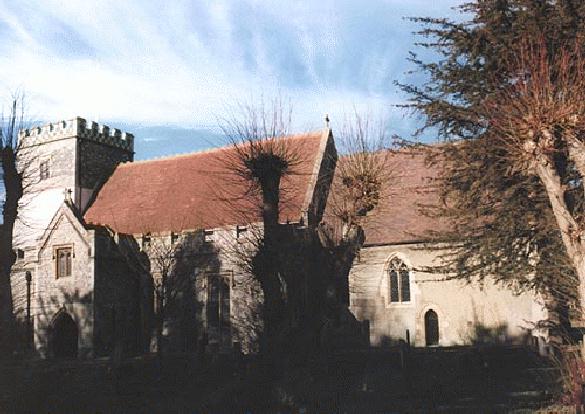 John BALDWIN168,169
was born on 24 Jun 1619 in Ashton Clinton, Buckinghamshire, England.
He was christened on 28 Oct 1635 in Ashton Clinton, Buckinghamshire, England.
He died on 25 Sep 1687 in Billerica, Middlesex, Massachusetts, USA.170
John BALDWIN168,169
was born on 24 Jun 1619 in Ashton Clinton, Buckinghamshire, England.
He was christened on 28 Oct 1635 in Ashton Clinton, Buckinghamshire, England.
He died on 25 Sep 1687 in Billerica, Middlesex, Massachusetts, USA.170
Henry Baldwin witnessed the will of John Baldwin of Billerica. They married cousins (both were Richardsons.) Candee Baldwin in the Baldwin Genealogy speculates these two factors could lead one to believe these two men were brothers.
Spouse: Mary RICHARDSON. John BALDWIN and Mary RICHARDSON were married on 15 May 1655 in Billerica, Middlesex, Massachusetts, USA.11,171,172 CD says Marr. was 15-3-1685 but must be a typo should be 1655 Children were: Mary BALDWIN, Mary BALDWIN, John BALDWIN, Jonathan BALDWIN, Susanna BALDWIN, Thomas BALDWIN, Phebe BALDWIN, Susanna BALDWIN, Phebe BALDWIN.
John BALDWIN was born on 25 Sep 1665 in Billerica, Middlesex, Massachusetts, USA.173 He died on 6 Apr 1736 in Billerica, Middlesex, Massachusetts, USA.170 Parents: John BALDWIN and Mary RICHARDSON.
Spouse: Sarah HEYWOOD. John BALDWIN and Sarah HEYWOOD were married on 5 Feb 1690 in Billerica, Middlesex, Massachusetts, USA.162,174 Children were: Sarah BALDWIN, Mary BALDWIN, Judith BALDWIN, Jude BALDWIN, Thomas BALDWIN, Ruth BALDWIN, John BALDWIN, Elizabeth BALDWIN, Abigail BALDWIN, John BALDWIN, William BALDWIN.
John BALDWIN was born on 27 Jul 1701 in Billerica, Middlesex, Massachusetts, USA.162 He died on 10 Sep 1701 in Billerica, Middlesex, Massachusetts, USA.162 Parents: John BALDWIN and Sarah HEYWOOD.
John BALDWIN was born on 21 Jan 1708 in Billerica, Middlesex, Massachusetts, USA.162 He died on 24 Oct 1738 in Billerica, Middlesex, Massachusetts, USA.170 Parents: John BALDWIN and Sarah HEYWOOD.
Spouse: . John BALDWIN and Sarah HILL were married on 4 May 1726 in Billerica, Middlesex, Massachusetts, USA.170
Jonathan BALDWIN was born on 28 Jan 1667/68 in Billerica, Middlesex, Massachusetts, USA.175 He died on 17 Feb 1736. Parents: John BALDWIN and Mary RICHARDSON.
Spouse: . Jonathan BALDWIN and Mary FRENCH were married on 13 Dec 1695 in Billerica, Middlesex, Massachusetts, USA.11
Joseph BALDWIN was born on 20 Oct 1728 in Billerica, Middlesex, Massachusetts, USA.22 He died in Mansfield, Tolland, Connecticut, USA. Parents: Thomas BALDWIN and Dorothy KIDDER twin.
Spouse: . Joseph BALDWIN and Elizabeth PORTER were married on 16 Nov 1757 in Mansfield, Tolland, Connecticut, USA.
Jude BALDWIN was born on 20 Jan 1695/96 in Billerica, Middlesex, Massachusetts, USA.162 Parents: John BALDWIN and Sarah HEYWOOD.
Judith BALDWIN was born on 20 Jan 1695/96 in Billerica, Middlesex, Massachusetts, USA.175 Parents: John BALDWIN and Sarah HEYWOOD.
Mary BALDWIN was born on 28 Jan 1659 in Billerica, Middlesex, Massachusetts, USA.175 She died on 1 Aug 1659 in Billerica, Middlesex, Massachusetts, USA.175 Parents: John BALDWIN and Mary RICHARDSON.
Mary BALDWIN was born on 11 Apr 1663 in Billerica, Middlesex, Massachusetts, USA.175 She died on 22 Apr 1703 in Billerica, Middlesex, Massachusetts, USA. Parents: John BALDWIN and Mary RICHARDSON.
Spouse: . Henry JEFFS and Mary BALDWIN were married on 13 Apr 1681 in Billerica, Middlesex, Massachusetts, USA.11
Mary BALDWIN was born on 16 Dec 1692 in Billerica, Middlesex, Massachusetts, USA.162 Parents: John BALDWIN and Sarah HEYWOOD.
Spouse: .
Phebe BALDWIN was born on 7 Feb 1675/76 in Billerica, Middlesex, Massachusetts, USA.175 She died on 24 Mar 1675/76 in Billerica, Middlesex, Massachusetts, USA.175 Parents: John BALDWIN and Mary RICHARDSON.
Phebe BALDWIN was born on 7 Feb 1679/80 in Billerica, Middlesex, Massachusetts, USA.175 She died on 19 Sep 1736 in Billerica, Middlesex, Massachusetts, USA. Parents: John BALDWIN and Mary RICHARDSON.
Spouse: . Roger TOOTHAKER and Phebe BALDWIN were married on 7 Aug 1718 in Billerica, Middlesex, Massachusetts, USA.
Rachel BALDWIN was born on 7 Oct 1721 in Billerica, Middlesex, Massachusetts, USA.22 She died on 27 Jul 1739 in Mansfield, Tolland, Connecticut, USA.163 Parents: Thomas BALDWIN and Dorothy KIDDER twin.
Ruth BALDWIN was born on 18 Apr 1699 in Billerica, Middlesex, Massachusetts, USA.162 She died on 20 Sep 1778 in Pelham, Hillsboro, New Hampshire, USA. Parents: John BALDWIN and Sarah HEYWOOD.
Spouse: .
Spouse: . Joseph WYMAN and Ruth BALDWIN were married about 1722.
Sarah BALDWIN was born on 28 Dec 1690 in Billerica, Middlesex, Massachusetts, USA.162 She died on 13 Sep 1739. Parents: John BALDWIN and Sarah HEYWOOD.
Spouse: . William SIMMONDS and Sarah BALDWIN were married in 1718.
Sarah BALDWIN was born on 3 Nov 1739 in Mansfield, Tolland, Connecticut, USA. The Ancestral File has her spouse as Joseph Locke. The only place I have found this marriage is in Billerica, Mass. vital records. (Sarah Baldwin to Joseph Locke Jr. of Lexington, May 7, 1761, in Lexington) I have not proven that this is the right Sarah yet. The first eight children of Thomas and Dorothy were born there, so it is a possibility.
Note by Yvonna Tyrrel Parents: Thomas BALDWIN and Dorothy KIDDER twin.
Spouse: .
Susanna BALDWIN was born on 14 May 1670 in Billerica, Middlesex, Massachusetts, USA.175 She died on 8 Sep 1675 in Billerica, Middlesex, Massachusetts, USA.175 Parents: John BALDWIN and Mary RICHARDSON.
Susanna BALDWIN was born on 14 Apr 1677 in Billerica, Middlesex, Massachusetts, USA.175 She died on 17 Jan 1758 in Billerica, Middlesex, Massachusetts, USA. Parents: John BALDWIN and Mary RICHARDSON.
Spouse: .
Thomas BALDWIN was born on 26 Mar 1672 in Billerica, Middlesex, Massachusetts, USA.175 He died on 12 Dec 1746 in Billerica, Middlesex, Massachusetts, USA. Parents: John BALDWIN and Mary RICHARDSON.
Spouse: . Thomas BALDWIN and Sarah FRENCH were married about 1698 in Billerica, Middlesex, Massachusetts, USA.
Thomas BALDWIN was born on 15 Mar 1697 in Billerica, Middlesex, Massachusetts, USA.162 He died on 23 Feb 1749/50 in Mansfield, Tolland, Connecticut, USA. Extracted Parents: John BALDWIN and Sarah HEYWOOD.
Spouse: Dorothy KIDDER twin. Thomas BALDWIN and Dorothy KIDDER twin were married in 1718 in Billerica, Middlesex, Massachusetts, USA.176 Children were: Dorothy BALDWIN, Rachel BALDWIN, Thomas BALDWIN, Eleazer BALDWIN, Joseph BALDWIN, Benjamin BALDWIN, Ephraim BALDWIN, Asa BALDWIN, William BALDWIN, Sarah BALDWIN, Benjamin BALDWIN.
Thomas BALDWIN was born on 22 Feb 1723/24 in Billerica, Middlesex, Massachusetts, USA.22 Parents: Thomas BALDWIN and Dorothy KIDDER twin.
Spouse: . Thomas BALDWIN and Deborah PADDOCK were married on 16 Nov 1748 in Mansfield, Tolland, Connecticut, USA.
Spouse: . Thomas BALDWIN and Abigail POLLARD were married on 8 Mar 1759.
William BALDWIN was born on 15 Sep 1710 in Billerica, Middlesex, Massachusetts, USA.162 He died on 21 Dec 1762 in Billerica, Middlesex, Massachusetts, USA. Parents: John BALDWIN and Sarah HEYWOOD.
Spouse: . William BALDWIN and Mary FARMER were married on 23 Sep 1741.
William BALDWIN was born on 5 Sep 1737 in Mansfield, Tolland, Connecticut, USA.163 He died on 1 Aug 1739 in Mansfield, Tolland, Connecticut, USA.163 Parents: Thomas BALDWIN and Dorothy KIDDER twin.
Agnes BAMPFIELD123,127,177,178,179 was born in 1377 in Chagford, Devonport, Devon, England. She was living in 1435 in Chagford, Devonshire, England.180 Parents: Thomas BAMPFIELD and Agnes COPLESTONE.
Spouse: John PROWSE. John PROWSE and Agnes BAMPFIELD were married in 1406 of Chagford, Devonshire, England.179,181 Children were: Richard PROWSE.
John BAMPFIELD123,127,181 was born about 1258 in , , Devonshire, England.
Spouse: Eleanor BEAUCHAMP. John BAMPFIELD and Eleanor BEAUCHAMP were married in 1292.180,182 Children were: John BAMPFIELD II.
John BAMPFIELD II123,127,181,182 was born about 1297 in Poltimore, Devon, England. He was living in May 1340 of Poltimore, Devon, England.180 Parents: John BAMPFIELD and Eleanor BEAUCHAMP.
Spouse: Isabel COBHAM. John BAMPFIELD II and Isabel COBHAM were married. Children were: John BAMPFIELD III.
John BAMPFIELD III123,127,181,182 was born about 1319 in Poltimore &, Huxham, Devon, England. He died by 1362.180,182 Parents: John BAMPFIELD II and Isabel COBHAM.
Spouse: Joan GILBERT. John BAMPFIELD III and Joan GILBERT were married. Children were: Thomas BAMPFIELD.
Thomas BAMPFIELD123,127,181,182 was born about 1345 of Poltimore, Devon, England.180 He died after 1392. Parents: John BAMPFIELD III and Joan GILBERT.
Spouse: Agnes COPLESTONE. Thomas BAMPFIELD and Agnes COPLESTONE were married about 1376.179 Children were: Agnes BAMPFIELD.
Berengar, Berenguela of BARCELONA183,184 was born about 1105 in Barcelona, Barcelona, Spain. She died in Feb 1149 in Palencia, Spain.185
Spouse: Raimúndez, Alfonso VII the Emperor, Count of CASTILE. Raimúndez, Alfonso VII the Emperor, Count of CASTILE and Berengar, Berenguela of BARCELONA were married in 1128 in Saldana, Spain.185 Children were: Sancho III King of CASTILE, Ferdinand II King of LEÓN.
Raymond Berenger IV of BARCELONA Marquis of Barcelona was born about 1120 in Barcelona, Barcelona, Spain. He died on 6 Aug 1162 in San Dalmacio bei Turin.138
Spouse: Petronilla de ARAGON. Raymond Berenger IV of BARCELONA Marquis of Barcelona and Petronilla de ARAGON were married on 11 Aug 1137 in , , , Spain.138 Children were: Alfonso II Raimundez King of ARAGON AND PAMPLONA.

