Surname List
Name Index
Sources
Email Us
Martha BULKELEY300 was born about 1572.299 Parents: Reverend Edward BULKELEY and Olive IRBY.
Spouse: . Abraham MELLOWES and Martha BULKELEY were married by 1595.315
Mary BULKELEY was born about 1567.299 Parents: Reverend Edward BULKELEY and Olive IRBY.
Nathaniel BULKELEY was born about 1574.299 He died in 1602 in , London, Middlesex, England.299 He had his estate probated on 4 Dec 1602 in St Michael, Bassinghall. London, England.299 Parents: Reverend Edward BULKELEY and Olive IRBY.
Paul BULKELEY was born about 1581.299 He was buried on 19 Oct 1610.299 Parents: Reverend Edward BULKELEY and Olive IRBY.
 Peter BULKELEY227,228
was born in 1405.
Peter BULKELEY227,228
was born in 1405.
Peter Bulkeley, a scion of the Bulkeleys of Bulkeley, co. Cheshire, held- Haughton, co. Cheshire, in right of his wife Nichola daughter of Thomas le Bird. Letters Patent granting annuity of 100 shillings to Peter de Bulkeley of Halghton by King Richard II 28 Sept. 1390. Parents: Robert BULKELEY and Agnes CHEDLE.
Spouse: Nicola BIRD. Children were: John BULKELEY.
 Reverend
Peter BULKELEY was born on 31 Jan 1582 in Odell, Bedfordshire, England.304 He died on 9 Mar 1658/59 in
Concord, Middlesex, Massachusetts, USA.304,316,317
He signed a will on 14 Apr 1658 in Concord, Middlesex, Massachusetts, USA.316 He had his estate probated
on 21 Jun 1659 in Concord, Middlesex, Massachusetts, USA.318
Reverend
Peter BULKELEY was born on 31 Jan 1582 in Odell, Bedfordshire, England.304 He died on 9 Mar 1658/59 in
Concord, Middlesex, Massachusetts, USA.304,316,317
He signed a will on 14 Apr 1658 in Concord, Middlesex, Massachusetts, USA.316 He had his estate probated
on 21 Jun 1659 in Concord, Middlesex, Massachusetts, USA.318
Reverand
The Merriam (Joseph, George and Robert) and Flint families are mentioned in
one of Ralph Waldo Emerson's poems "Hamatreya:"
"Bulkeley, Hunt, Willard, Hosmer, Meriam, Flint,
Possessed the land which rendered to their toil
Hay, corn, roots, hemp, flax, apples, wool and wood.
Where are these men? Asleep beneath their grounds
And strangers, fond as they, their furrows plough.
They added ridge to valley, brook to pond
And sighed for all that bounded their domain.
Each of these landlords walked amidst his farm
Saying 'T' is mine, my children's and my name's"
The poem was cited in a book on Concord by Ruth Wheeler, "Concord, Climate for Freedom."
Peter Bulkeley was the Reverend and one of twelve families to which Concord was granted. There is no record of the other incorporators, but it is concluded that the Merriams and Flints were likely among them.
Peter Bulkeley: Deacon and Co-Founder of Concord, Massachusetts
by Paul D. Kilburn
Posted August 8, 2003 on http://www.newenglandancestors.org
Peter Bulkeley in Odell
Peter was the most famous rector of the Church of All Saints in Odell, because of both his religious writings and his immigration to America. The youngest child of Edward and Olive, Peter was born in Odell on January 31, 1583, and died in Concord, Massachusetts, March 9, 1659. Peter was admitted to St. John’s College, Cambridge, when he was about sixteen. Cotton Mather, in his Magnalia Christi Americana, wrote of Peter’s education as “... learned, it was genteel, and, which was top of all, it was very pious.” He became a Fellow of St. John’s in 1605. He was also a university preacher and canon of Lichfield in 1609, but returned to Odell in 1610 to assist his father. His father resigned the same year and Peter became rector, a position he retained until “suspended” by church authorities in 1634.
Peter married Jane Allen at Goldington, Bedfordshire, on April 12, 1613. She was baptized at Goldington on January 13, 1588, and died at Odell about December 8, 1626. They had nine children but only six survived childhood. They undoubtedly moved into the rector’s house where his father and mother lived. His mother died two years after the marriage, on March 10, 1615. His father probably lived with the son and his growing family in the large house until he died on January 5, 1621.
Five of Peter’s sons lived to sail to America. Their first son, Edward (bap August 5, 1614), was born the year after Peter and Jane were married. He preceded the family to Boston in 1634 and arranged for them to move directly into a house in Cambridge after they arrived. He succeeded Peter as minister at Concord when his father died. The second son, Thomas (bap April 13, 1617), my ancestor, married Sarah Jones, daughter of Reverend John Jones, and moved from Concord with the Reverend in 1644 to Fairfield, Connecticut, where he became a landowner. The third son, John (bap February 6, 1620), was a member of Harvard’s first graduating class in 1642. He stayed at Harvard and taught, but eventually returned to England where he became rector of Fordham, Essex. The fourth son, Joseph (bap May 4, 1623), and the fifth son, Daniel (bap August 28, 1625), also came to America with the family. Jane died on December 8, 1626, and was buried at Odell. She died during or shortly after childbirth, as the ninth child, Jabez, was baptized on December 24, 1626 (he died in 1629).
In addition to his personal tragedies in the 1620s, Peter was struggling with his faith. Puritanism was a growing religious force and no preacher in the land was unaffected by this new religion. Its appeal of simplicity, earnestness, and definite ideas about reform appealed to many devout and sincere clergymen. Many felt that the English church of the day was too much concerned with ritual and ceremonials. Jacobus states it thus: “In brief, the ideal of the Puritans was to get away from formalism, to eliminate the trimmings and trappings, to appeal to the conscience of the individual, and to make the Bible (rather than church doctrine) the basic guide and authority for the religious life.”
The crisis for Peter came in 1634 when he was suspended for not attending the visitation of Sir Nathaniel Brent, Vicar-General. Peter himself later admitted that he did not wear a surplice, nor make the sign of the cross in baptism, regarding them as superstitious ceremonies. The Bishop of Lincoln did not seem to object to what he considered token nonconformity, but Archbishop Laud would not tolerate any deviation from church doctrine, hence the suspension. Peter knew that if he did not apologize and reform he would lose his rectorship. Peter chose not to yield but to continue his Puritan approach. He laid plans to migrate to New England, where, despite being over fifty years old, he could preach completely from the heart and not be subject to constant eavesdropping and concern about deviation from church doctrine. It must have been a momentous decision, for he was wealthy and lived nearly all his adult life in a large and comfortable house in the village where he had grown up. He would be giving up physical comfort for religious freedom.
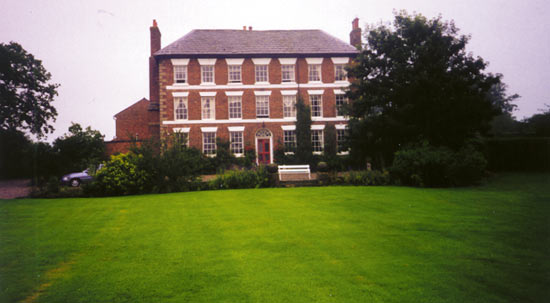
Today Odell’s population is less than two hundred. When my wife and I visited the village in 1997, the Church of All Saints was definitely the prominent feature. Immediately to the east of the church was the modified rector’s house where Peter was probably born and raised. A small village green and a thatched-roof public house with a sign reading “since 1716” are located a block from the church. A small stream runs through the village, with a side channel through the inoperative mill in the old mill house. The gears and wheel still remain.
Peter remained an unmarried widower for eight years before marrying Grace Chetwood in April 1635. That same year he liquidated his holdings and assembled £6000 for the voyage to America. The trip took careful preparation. Anyone leaving the country had to obtain certificates from the justice of the peace and the church, and being a non-conformist minister he would not have been allowed to leave. Fortunately, some members of the clergy were sympathetic to non-conformists and were willing to provide them with the required papers. Furthermore, most ship captains were interested in passage money, not religious matters.
The main challenge for Peter and his family was to avoid government spies, and to this end Peter took special precautions. On April 13, 1635, “Jo:Backley” [John Bulkeley] was placed on the ship’s approved passenger list. Five days later “Ben Buckley” and “Daniell Buckley” were accepted [undoubtedly Joseph and Daniel]. It is presumed that friends, perhaps those sailing with Peter, took these boys separately to the shipping office to give the impression they were part of their families. Almost a month later, on May 8, his new wife, Grace, age 33, was put on the passenger list of the Elizabeth & Ann, while on the following day Peter, age 50, put his own name on the Susan & Ellen list. Both ships were to sail at about the same time, and in this way the family could exit England with less chance of discovery. However, Grace, who was pregnant at the time, definitely sailed with her husband on the long voyage of the Susan & Ellen, as written stories of her illness on the ship reveal. It is likely that Grace simply changed places with another woman, who took her place on the Elizabeth & Ann.
Edward, the eldest son, had sailed the year before and was making preparations for the arrival of Peter and his family. The second son, Thomas, does not appear on any passenger lists found to date, though he probably sailed with his father under another name. Another theory is that the seventeen-year-old sailed with his older brother in 1634.
The trip was not without trauma. As previously noted, the pregnant Grace was very ill for most of the trip and, according to one account, had died, but was resuscitated just before landing in Boston. She was carried from the ship as an invalid, but fully recovered and bore four children: Gershom, born in Concord the next January, Eleazer (b 1638), Dorothy (b August 2, 1640), and Peter (b August 12, 1643). Grace died in 1669 the age of sixty-seven.
The ship arrived in midsummer and the family repaired to Cambridge where Thomas had obtained accommodations for the family. The leadership in Boston, including Governor John Winthrop and Reverend Cotton Mather, agreed that Bulkeley and Simon Willard should lead an expedition of about one hundred families some fifteen miles west through the wilderness and establish a new church and settlement in the Musketaquid area, later to become Concord, Massachusetts. Although only twelve families actually made the trek, they accomplished what they had set out to do.
Settlement in Concord
Musketaquid was at the confluence of two rivers and was, in many respects, like Odell, where Peter Bulkeley came from. Reynolds wrote of the similarity, "The same green meadows, the same upland plains, the same tranquil stream, meet the gaze in the one case as in the other." Scudder describes the site as having "...seven natural ponds; more than nine miles of beaver-haunted fish-abounding river, bordered by meadows of lush grass . . . excellent for cattle; any number of lesser streams on which to build mills; several small cornfields already under Indian cultivation, and plenty of rich bottom land for clearing . . ."
Peter may have heard of Musketaquid in England, for his son Edward may have presented this idea to the Great and General Court, the governing body of the colony of Massachusetts. On September 2, 1635, the town of Concord was incorporated by this court, not long after Peter’s arrival.
Peter became acquainted with many of the colony’s settlers and several ministers in the Boston area. He and the well-known minister John Cotton, of Boston’s First Church, were both Cambridge graduates and residents of the same diocese in England. Peter was known as a courageous, well-educated leader who possessed a strong faith. His leadership was unquestioned, particularly in religious matters, and he worked closely with Reverend Jones, who held the title of Minister, in establishing the first church. Peter was initially appointed Teacher by the Boston authorities and did not become Minister until Jones left in 1644. Jones was another disposed deacon from England who arrived in Boston a few weeks after Peter and his family.
While Peter became the key religious leader, the secular leader and co-founder of Concord was Simon Willard, a “thirty-year-old Kentish soldier, shrewd trader, expert surveyor.” As a leading citizen of the town, he was appointed to several prestigious posts, including captain of the militia company, the town’s first assistant to the governor, and its first magistrate. Willard later led the colony’s forces against the Indians and was made commissioner of the colony’s fur trade.
Led by Bulkeley and Willard, twelve families made the original trip to Musketaquid, which consisted of thirty-six square miles, six miles on each side. The route they traversed, later called the Great or Bay Road, was rough, swampy in places, rocky in others, yet they forced their oxen with supplies and belongings and finally arrived at the former Musketaquid and the new Concord. Scudder describes the scene and the first years thusly:
"In front lay the little river. To the right, cutting off winds from the north, stretched a long, uneven, sandy ridge with a crook in its elbow, the forearm bent northward. In this ridge, the . . . dozen families scooped crude dugouts, where they lived through that first hard winter. Simon Willard knew all about wigwam dugouts, copied from Indian storage pits by ingenious white men."
Probably the first real house built was the minister’s, or the trader’s. Right afterwards would follow the meetinghouse for congregational worship. After the minister’s house came other permanent dwellings along the sunny side of the Bay Road beneath the ridge where the dugouts were caving in. Small houses, smaller than most yeomen’s cottages in Kent and Suffolk and other British shires, from which their lines were copied, built of boards instead of English brick or stone, the wood soon seasoning to a wasp-nest gray. Sedge from the river meadows, in place of English thatch, for roofs …"
Each household was granted a land allotment of six acres. The portions of the grant most suitable for plowing and planting were divided into planting fields and within them strips were divided equally among the settlers. Soon the common fields were exchanged and traded so that each person had his own block of land, a much more economical way of managing the agricultural land.
The first order of business, however, was the treaty with the Indians, which took place at Jethro’s Oak, which today is marked with a sign. Simon Willard led the negotiations. They eventually purchased “6 myles of land square” from the squaw sachem with the following: …for one parcel of wampum, several knives and hatchets, some hoes to replace their cultivating sticks and clamshells, some cotton clothes and shirts . . . .To the medicine man—the squaw sachem’s husband—a suit of cotton cloth, a high-crowned hat of heavy English felt, shoes, stockings, and a greatcoat.
With these negotiations and token payment the new settlers gained title to a large area. Peter Bulkeley, the wealthiest of the group, reserved gristmill rights and located his millhouse at the “milldam,” now in the center of town where part of the brickwork for the old millhouse is still present. This had been the site of an Indian fishing Weir.
On July 5, 1636, the Concord Church was officially organized in Cambridge (itself only six months old). The new church was the fifteenth established in Massachusetts. At the organizational meeting Peter Bulkeley and John Jones were chosen as Teacher and Pastor (now called Minister), respectively, as each church was supposed to have two elders.
Concord did not prove the paradise anticipated by the town’s inhabitants. Establishment of new farms and a new community in the midst of the New England wilderness required enormous effort by all. The second winter was even harsher than the first. Going barefoot in the summer, as many had to do, was bad enough, but many lacked shoes even in the cold winter. Snow came early and disappeared late in the spring. For several years late spring frosts killed some of the early crops, and the subsequent summers were often wet and cool, which resulted in rotten grain. Fish were abundant, but wolves often dug up the fish placed around corn hillocks to fertilize the new corn. Flooding by the river often destroyed crops planted in the fertile soil of the flood plain. The meadow grass proved too rich for the cattle and many became sick. Hogs escaped from Hogpen Walk and were killed and eaten by lynx. In these harsh conditions many children died.
Concord was severely affected and the small population could no longer support two ministers. At the same time, victory over the fierce Pequot Indians in Connecticut opened its interior to safe passage. In 1639 the newly established town of Fairfield, Connecticut, needed a new minister. A separation took place in Concord and Reverend Jones led a sizable group overland to Fairfield in 1644. Only thirty families remained in Concord, but the winter following this first mass exodus was warm, and the new town survived and gradually grew in population.
After the exodus of 1644 a new problem arose affecting all of Massachusetts. Cromwell’s victory in the English Civil War resulted in the downfall of King Charles and his Archbishop Laud. In Massachusetts, ministers exulted the victory from the pulpit. The striking changes in England, however, meant that the main cause of emigration ceased and, accordingly, shipping both to and from England fell off sharply. Conditions worsened as prices for cattle and timber fell, while prices for imported necessities rose alarmingly.
Peter became an even more important leader of the colony. He often fulfilled special tasks for the leadership in Boston, such as investigating high prices and assembling and publishing the laws of the colony. He was the first of six prominent men in the colony to turn down Oliver Cromwell’s offer to found a Puritan stronghold in Ireland with aid from England. These men preferred to remain in New England and handle the many challenges in their own colony.
Peter lost one battle in the town. He could not get the town fathers to support a schoolmaster, a requirement for towns with more than fifty householders. They preferred to pay the five pound fine levied each year by the General Court, because they felt their children should work and help support the family rather than attend school. Many of the literate settlers raised children who, as adults, could not sign their names on land deeds.
On another matter, the support of Harvard College, he fared better. Some forty-two citizens pledged five pounds annually for seven years to support the new college. The citizens also sent their ablest sons to the Harvard. John Bulkeley, son of Peter, was one of nine young men who made up the first graduating class.
Peter’s most important work, The Covenant of Grace Opened, was published in 1646. In it Peter expressed some of his most sincere religious ideas. A small portion is extracted here:
Whatever salvation and deliverance God gives unto his people, his setting them free from this misery, he doth it be virtue of, and according to his Covenant.
God conveys his salvation by way of covenant, and he doth it those onely that are in covenant with him . . . this covenant must every soule enter into, every particular soule must enter into a particular covenant with God; out of this Way there is no life. In the covenant of works a man is left to himselfe, to stand by his own strength. But in the Covenant of Grace, God undertakes for us, to keep us through faith. God comes and sayes; For my owne sake will I do thus and thus unto you in an absolute promise; here is a ground for the faith of adherence to cleave unto . . . There be also conditional promises (He that believeth shall be saved) by meanes of which (we having the experience and feeling of such grace in our selves) we grow to an assurance that we are of those that he will shew that free grace upon. Now we can never know the things which are given unto us of God, but by knowing of the covenant which conveys all the blessings which God doth impart unto his people. ...
We (in New England) are as a city set upon a hill, in the open view of all the earth. The eyes of the world are upon us, because we professe ourselves to be a people in Covenant with God.
While this covenant was Peter’s major written product, he also authored many sermons and short poems. A year before his death in 1657 he wrote the following poem:
I’ve reached the evening of my mortal day;
A sluggish mass of clay is this my frame;
Yet grant, O God, that while I live, I may
Live to the glory of thy holy name.
And if in life I may not honour Thee,
From such dishonour may Death set me free.
Whether within Thy holy courts below
I preach salvation unto dying men—
Or in Thine Upper Temple, with the flow
Of angel-quirings blend my raptured strain—
Living or dying, Thine I still would be:
My life and death alike are due to Thee.
Peter wrote his will April 14, 1658, and later added two codicils, the second of which was prepared shortly before he died on March 9, 1659. In it he states that his estate is “very little in comparison of what it was, when I came first to this place,” for he had borne a disproportionate share of town expenses during the formative years. His estate was significant despite his introductory remarks in the will. Peter was undoubtedly buried in Concord’s Old Hill Burying Ground, likely in the old unlabelled crypt at the southeast corner of the cemetery, which still remains. Parents: Reverend Edward BULKELEY and Olive IRBY.
Spouse: . Reverend Peter BULKELEY and Jane ALLEN were married on 12 Apr 1613 in Goldington, Bedfordshire, England.304,319,320
Spouse: . Reverend Peter BULKELEY and Grace CHETWODE were married in Apr 1635.320,321
 Robert BULKELEY228 was born in 1326.
From here back, this line has not been proven. Parents: William BULKELEY and Maud DAVENPORT.
Spouse: Agnes CHEDLE. Children were: Peter BULKELEY.
Robert de BULKELEY.228
Bulkeley Genealogy in England The Bulkeley surname can be traced to the town of Bulkeley, Cheshire, some twelve miles southeast of Chester and immediately south of the Bickerton Hills. Approximately five miles north in the Bickerton Hills is Beeston Castle, which affords a magnificent view of Bulkeley country in all four directions. Southwest of the town of Bulkeley on Bulkeley Hall Lane is a large manor house called "Bulkeley Hall". Robert de Bulkileh was lord of this manor in 1200. His son William received a quitclaim from his two sisters in 1233 that provides solid evidence of their ownership of the property at that time.The family retained ownership of the manor for several generations (and through several surname variations) until Peter de Bulkylegh (b abt 1325), who held Haughton, Cheshire, in right of his wife, Nichola le Brid, moved there with his family. It was Peter’s son who left Cheshire for Woore, Shropshire, and this is where grandson Hugh was born (abt 1405). For several generations the family remained in Woore, and it was here that Peter’s grandfather, Thomas, was born about 1515. He later married Elizabeth Grosvenor (abt 1539) in Bellaport, and they had five children. Elizabeth’s mother was Ann Charlton, who was born about 1480 at Apley Castle, Shropshire, and it is her ancestry that leads back to royalty.
Children were: William BULKELEY.
Rowland BULKELEY was born about 1538 in , Buntingdale, Shropshire, England. Parents: Thomas BULKELEY and Elizabeth GROSVENOR.
Sarah BULKELEY300 was born about 1580.299 She died by 1611.299 Parents: Reverend Edward BULKELEY and Olive IRBY.
Spouse: . Sir Oliver ST. JOHN and Sarah BULKELEY were married in 1597.
Thomas BULKELEY78,106,107,228,298,322
was born between 1510 and 1520 in Market Drayton, Woore, Shropshire, England.
He died in 1591 in Market Drayton, Woore, Shropshire, England.298
Thomas Bulkeley, of Woore, b. say 1515-20, Buntingsdale in the parish of, Market Drayton, Shropshire, died in 1591 and buried at Market Drayton; married Elizabeth Grosvenor, b. say 1520, daughter of Randall Grosvenor of Bellaport, co. Shropshire.
The Will of Rev. Peter Bulkeley's Grandfather:
Because of the serious illness of the gentleman who was commissioned to copy the will of Rev. Peter Bulkeley's grandfather Thomas Bulkeley of Woore, Shropshire, the copy was not received in time to be printed in the account of the Bulkeley family on page 5. The document is so interesting that we are printing her a very full abstract. The original was probated at Lichfield, but is now kept at the Probate Registry at Birmingham.
The 23 June 33 Elizabeth. Thomas Bulkeley now remayning at Coulsis in pish of Drayton in Hales, dio of coûtry & Licbfield of good & pfect health of bodie & mynde, etc. My Bodie to be buryed in the Chappel called our Ladie Cbappel in Drayton Church. T‘o the reparacons of the same chappel and my buryall XXs whereof Xs is to be bestowed by the church wardens and other Xs by 4 my executors. I will that Marie Bulkeley wyfe of my nephew Willm Bulkeley shall have & enjoy all such Lands as I have Conveyed to her use for the terme of her life as by Indre between Richard Colton of Cumbermaire, Esq, Co. Chester her father and me the said Thomas Bulkeley may more playnlie appear in full satisfaction of her dowrye & Joynture and after her decease the same to remayne to my sayd Nephew Willm Bulkeley son of Roland Bulkeley & to his heirs and for default of such Issue to the use of me and my right heires forever. I give my messuage Cottages lands tenements etc. in hunstanton & Bridgemere in the pish of Wibunburye, Co. Chester to the sayd Willm Bulkeley my Nephew & his heires And for default then to my right heirs. After my decease I give my Capital Messuage with all the apptenauncs called the halle of Bulkeley and all my Other Messuage lands, etc. in Woouer de Gravenhanger Co. Salop & in Okeley & Kneighton, Co. Stafford and in Bureton PooIe Stooke Hawghton hurleston moulton & Surtage Co. Chester unto my sayd Nephew Willm Bulkeley & to his heires males And for default then to Rowland Bulkeley my eldest son and Margaret now his wyfe for xl yeares if the sayd Rowland and Margaret or either of them so long lyve and after their decease then to the heires males of the sayd Rowland and for default then to my second son Edward Bulkeley & his heires male and for default then to my daughter Katherine Barker and her heris--I give to my son Edward Bulkeley an annual Rent of xls for Life out of my lands in Woover & Grënhonger To my Nephew WilIm as heire loomes two great potts & my greatest panne my best presse & best cupboard weh remayne now at my house in Wouer Also my best bed at Wouer wt all belonging to it wt all other my goods & Chattells at my sayd house at Wouer, And he shall not have any power to bargain sell or give away any of the sayd stuffe appoynted to him for heire loomes but only to occupie the same for his lyfe. I bequeath to my daughter Margaret Smith xx li in custody of Rowland Bulkeley and to my daughter Kathetine Barker xx li in Custody of her husband. To my son Edward Bulkelely xx li whereof x li is in his own Custody. To my three sons in Lawe George Barker, William Greene & Thomas Smith xls each in goods. To my sister Helen Mills xls. To my sister in Lawe Anne Bulkeley of Wou er and to her daughter in Law xls. To Thomas Bulkeley her son xls wch is in his own Custodie. To every godchild xijd. To my daughter in Lawe Margt Bullkeley v li. To Humfrey Wordley an angell of gould. To my son Barker my best gowne & cappe. The rest of my apparell to be divided amonge my friends & some to my servants. The rest of my goods to be devided into three parts, the first to the children of my son Edwd, the second arnonge the children of my daughter Margt Smith, the third amonge the children of my daur Katherine. To my cosen Edwd Clerke my furred cloke. To my cosen Thos Whitmore my gowne furred with conye. To my nephew William my bed that I now lie upon at Coulsis and all the furniture belonging thereunto. To my cosen
Duffield of London and his weif xxs. To John Male xxs. To Raphe Bickerton and his weif xiijs iiijd. To Johane Hayward xiijs iiijd in pate recompence the paynes and travaile that she hath taken with me a in my sicknes. To my cosen Richard Derways & his wief xxs . To cosen Robert Grosvenor one angell of gould. To my daughter in Lawe Olive Bulkeley two angells of gould. Wheras my Nephew William Grinsell oweth me ??? markes now I give to his mother xls and the other xxvjs viijd I forgive him. I will that Mr Darker Vicar of Drayton and my son in Lawe George Barker and John Cartwrite of Drayton shall have v rnarkes of my goods to such use as I have declared unto them. I will that an alabaster stone be provided to be uppon me and my wief to be written upon as followeth "Here is buryed Thomas Bulkeley and Elizabeth his weif sonne & heire of William Bulkeley late of Woer and of Beatrice his weif daughter of William Hill some tyme Lord of Buntingsdale Blore and Longestowe which Thomas departed this world," etc. I make my son Edward Bulkeley sole executor, or if he dye before, then my son in law George Barker. Supvisors: the right worshipfull ffrancis Newport of Arcolie and Roland Barker of Haughmond, Esquiers, to either of whom I give one old Royall of Gould. l give to my son in law Geprge Barker fortie shillings to discharge my funerall as he shaJl think meete. Whereas I have by Deed bearing date 16 Dec. 28 Elizabeth devised and granted to my second son Edward Bulkeley my Capitall Tenement in Pullie, Co. Chester with all other lands tenements, etc. in Pullie afordesayd and in Stoke and Hurleston in the sayd Co. of. Chester from and immediatly after my decease and Elizabeth my wife allreadie deceased for sixty yeares as by the sayd deede indented more at large it doth and may appeare I do by this my present will demise and bequeath and my will is that the sayd Edward Bulkeley and his assigns shall quietly haue and inoye the sayd Capitall Messuage, etc. In witness, etc. Signed Thomas Bulkeley [the seal gone]. Witnesses: Roger Daker, Roland Hill, Osmary Hill senr. William Garner.
Proved at Lichfield 19 October 1591, by Wilhiam(?] Bulkeley son and executor.
The above will and the inventory of the estate. of Rev. P Bulkeley's grandfather are of great interest as indicating the social status of the family and the social conditions of the period, It will be noted that the lands Were not appraised for inclusion in the inventry. The Landed estates were entailed for the benefit of Mr. Bulkley‘s eldest grandson, William, whom he calls "nephew." This term was used in that sense, in strict conformity with its derivation from the Latin "nepos" The term "cousin" in the will refers to nephews of Mr. Bulkeley or of his wife, or to the husbands of his nieces. The will does not add very greatly to our genealogical knowledge, and its chief importance is that it verifies many of the statements made in the pages of the present volume. It is interesting to note that Thomas named his son Edward and daughter-in-law Olive, who were the parents of the Rev Peter Bulkeley; also, that he mentioned the names of his own wife Elizabeth, and those of his parents and of his maternal grandfather. The cousin Robert Grosvenor whom he mentioned was doubtless a nephew of his wife, Elizabeth Grosvenor. The cousin Thomas Duffield was husband of his niece, Jane Miles.
The sister who was called Hellen Mills in his will was identical with the Elianor Myles of London, widow, whose will dated 5 Nov. 1594, proved 13 Nov. 1594, directed that she should be buried in the church of St. John's WaIbroke near the corpse of her late husband William Myles, pewterer. Mrs. Miles gave twenty schillings for a ring to her cousin [nephew] Mr. Edward Bulkley, D.D., and the same to her cousin [nephew] Rowland Myles and named her cousin Mr. Doctor Bullkley ‘as an overseer of her estate, the Chief legatees being her four children, Rowland Myles, William Myles, Alice wife of John Leverton, and Jane wife of Thomas Duffield. Parents: William BULKELEY and Beatrice HILL.
Spouse: Elizabeth GROSVENOR. Thomas BULKELEY and Elizabeth GROSVENOR were married in 1533 in Woore, Shropshire, Shropshire, England.304,323 Children were: Reverend Edward BULKELEY, Rowland BULKELEY, Margaret BULKELEY, Anne BULKELEY, Catherine BULKELEY.
William BULKELEY228 was born about 1300.
Parents: Robert de BULKELEY.Spouse: Maud DAVENPORT. Children were: Robert BULKELEY.
William BULKELEY228,298
was born in 1498 in Oakley, Shropshire, England. He died on 4 Mar
1571.298
William Bulkeley, of Oakley, married Beatrice, daughter and coheir of William Hill, of Buntingsdale, Shrophire, by his wife Alice, sister and heir of Richard de Bunbury. He died 4 Mar. 1571. Arms, of Hill: Gules, a chevron between three pheons argent. Parents: Humphrey BULKELEY and Cecily MOULTON.
Spouse: Beatrice HILL. Children were: Thomas BULKELEY.
Sarah BURGES was born in 1559 in Goudhurst, Kent, England. She died in Hadlow, Kent, England.
Spouse: William MERRIAM. William MERRIAM and Sarah BURGES were married in , , , England. Children were: William MERRIAM, Joane MERRIAM, Margaret MERRIAM, Susan MERRIAM, Sarah MERRIAM, Miss MERRIAM, Joseph MERRIAM, George MERRIAM, Robert MERRIAM.
Joane BURGH died in 1610 in Maresfield, Sussex, England.83,324
Spouse: John KIDDER. John KIDDER and Joane BURGH were married before 1595 of Maresfield, Sussex, England. Children were: James KIDDER.
Carloman, King of BURGUNDY46 was born about 751 in of, Aachen, Rhineland, Prussia. He died on 4 Dec 771 in Samoussy, Austrasia, France. He was buried in Abbaye De St Rbemy, Reims, Neustria. Parents: Pbepin III "The Short" King of FRANCE and Berthe (Bertrade) Countess of LOAN.
Constance of BURGUNDY139,325 was born in 1046.326 She died in 1093.326
Spouse: Ferdinandez, Alfonso VI, King of LEÓN & CASTILE. Ferdinandez, Alfonso VI, King of LEÓN & CASTILE and Constance of BURGUNDY were married on 8 May 1081.326 Children were: Urraca Countess of CASTILE.
Henri I, Duke of BURGUNDY46 was born in 946 in , , , France. He died on 15 Oct 1001/2. Parents: Hugues Magnus, Duke of FRANCE and Hedwige (Hartwige) Princess of The GERMANS.
Otto Eudes, Duke of BURGUNDY46 was born in 944 in , , , France. He died on 22 Feb 965. Parents: Hugues Magnus, Duke of FRANCE and Hedwige (Hartwige) Princess of The GERMANS.
Rudolph King of BURGUNDY46 was born about 880 in of, , Bourgogne, France.
Children were: Willa Princess of BURGUNDY.
Willa Princess of BURGUNDY46 was born in 906 in of, , Bourgogne, France. Parents: Rudolph King of BURGUNDY.
Spouse: Boso Marquis of TUSCANY. Children were: Willa Princess of TUSCANY.
Rudolf (Raoul) Count of CAMBRAY46 was born about 867 in of, Flanders, Nord, France. He died on 17 Jun 896. Parents: Baudouin I Count of FLANDERS and Judith Princess of FRANCE.
Idoine de CAMVILLE.6
Spouse: William LONGESPEE Knight. William LONGESPEE Knight and Idoine de CAMVILLE were married. Children were: Ela LONGESPEE.
Mary CANNE was christened in 1580 in Old Buckenham, Norfolk, England.327 She died on 21 Mar 1642 in Dedham, Essex, England.327
The Banham subsidy assessment dated March 1641 contains several widows, but no mention of any Clarks. Although this list probably does not include all the property owners, Mary's absence suggests that she may have been the “Mary Clarke widdow” at Dedham who “was received into ye church giving very good satisfaction 1d 2m 1642” and whose death is recorded there soon after, as “our sister Clarke widdow being taken with strange fits of ye Collicke 21d 3m 1642 died in the evening that followed,” and as “Mary Clarke deceased the 22nd of ye 3 mo.
Spouse: Thomas CLARKE. Thomas CLARKE and Mary CANNE were married on 17 Oct 1602 in , Banham, Norfolk, England.327 Children were: Thomas CLARKE, Rowland CLARKE, Rebecca CLARKE, Joseph CLARKE, Mary CLARKE, Elizabeth CLARKE.
Hannah CARTER was born about 1625. She died on 20 Sep 1657 in Woburn, Middlesex, Massachusetts, USA.328 Parents: Thomas CARTER and Mary.
Spouse: William GREEN. William GREEN and Hannah CARTER were married on 1 Mar 1642 in Charlestown, Suffolk, Massachusetts, USA.11,328 Children were: Mary GREEN, Hannah GREEN, John GREEN, William GREEN, Ebenezer GREEN.
Spouse: . Thomas BROWNE and Hannah CARTER were married.11
Capt. John CARTER was born in 1616 in , , , England. He died on 14 Sep 1692 in Woburn, Middlesex, Massachusetts, USA.329,330 "MEMENTO MOBI." "FUGIT HORA."
" Here lyes y' body of Cap't. John Carter aged about 76 years, deceased y 14 of September 1692." v Capt. John Carter, an early inhabitant of Woburn, subscribed the "town orders." 1640; styled ensign, 1653, and lieutenant, 1664; was captain in 1675, the time of Philip's" War; was selectman 1664, and 1672 to 1079; commissioner " to end small causes," 1664, 1674; and commissioner " of the rate," 1653, 1658, and 1608. Ensign, 1651; lieutenant, 1664; captain, 1672. Ordered that Lieut. John Carter be captain, 1672. (See Colony Records.) His first wife, Elizabeth, died 1691 (epitaph 3). He married, second, Elizabeth Groce, 1691, ( Vide notice of his family, Sewall's History, 578, and further of him, 1bid., 38, 39, 79, 112.) Parents: Thomas CARTER and Mary.
Spouse: . Capt. John CARTER and Elizabeth KINDALL were married in 1642 in Woburn, Middlesex, Massachusetts, USA.11
Spouse: . Capt. John CARTER and Elizabeth GROSE were married in 1691 in Woburn, Middlesex, Massachusetts, USA.11,331
Joseph CARTER was born about 1604 in Charlestown, Suffolk, Massachusetts, USA. He died on 31 Jan 1676 in Charlestown, Suffolk, Massachusetts, USA.87 *In April, 1659, Joseph Carter of Woburn is released from all ordinary trainings on condition that he shall pay five shillings annually to the use of the military company where he lives. - Middlesex County Court Records, Vol. I., page 175. In April, 1672, and again in 1673, Joseph Carter of Woburn renewed his license for keeping an ordinary for the year ensuing - Ibid, Vol. III, pages 33 and 58. Owing to the loss of Vol. II. of the Court Records, covering the period 1664 - 1671, then is no record of the first grant of a license to Joseph Carter; but there is on record among other papers, dated 1671, the following letter, * fac-simile of which appears in the Preface to this book: "To our Honored Magistrates Assembled in the County Court. Much Honored, so pleased to hear the request of us who have have hereunto subscribed: Namely that Joseph Carter may be licensed to keep an ordinary in our town in the room of John Sear who is wilting to lay it down and according too our bounden duty we hope to remain yours to honor and obey in the Lord. By Order of the Selectmen of Woburn.
Parents: Thomas CARTER and Mary.
Spouse: . Joseph CARTER and Susanna CHAMBERLAIN were married by 1650 in Charlestown, Suffolk, Massachusetts, USA.11
Mary CARTER was born about 1619/20 in Charlestown, Suffolk, Massachusetts, USA. She died in 1673.87 Parents: Thomas CARTER and Mary.
Spouse: . John BRINSMEAD and Mary CARTER were married on 24 Oct 1639.11
Samuel CARTER was born in 1608 in , , Devonshire, England. He died on 29 Aug 1681 in Charlestown, Suffolk, Massachusetts, USA.87 Parents: Thomas CARTER and Mary.
Spouse: .
Spouse: . Samuel CARTER and Winifred HARWOOD were married in 1639 in Charlestown, Suffolk, Massachusetts, USA.11,87
Thomas CARTER332,333 was born about 1585 in , , , England.86 He signed a will on 5 May 1652 in Charlestown, Suffolk, Massachusetts, USA.334 He died about 1652 in Woburn, Middlesex, Massachusetts, USA.86 He had his estate probated on 5 Oct 1652 in Charlestown, Suffolk, Massachusetts, USA.334
THOMAS¹ CARTER, probably born in England, about 1585, died in Woburn, about 1652. He married probably in England, about 1606, MARY_____ , who died in Woburn, 6 Mar. 1664-65. In her death record, it is noted that she was "mother of all the Carters in Town."
There are three Thomas Carters connected with the very early history of Woburn, and, as might be expected, they have been confused by various compilers, viz: this Thomas Carter, his son Thomas² Carter, and the Rev. Thomas Carter. Thomas Carter Jr., was born about 1607; the Rev. Thomas Carter was baptised 3 July 1608, Hinderclay, Suffolk, came to New England in 1637, was first a miniister of Dedham and Watertown and settled in Woburn in 1642, ten years before the death of Thomas Carter Sr. The minister died in 1684, and Thomas Jr., passed away in 1694. Thomas Carter Sr., was a blacksmith. He was admitted to the Church in Charlestown, 9 Jan. 1636, and his wife, Mary, became a member of the same church, 4 Nov. 1643. He was made a Freeman, 7 Mar. 1636-37,* and in 1688, owned nine lots of land. In 1647, he deeded one-half of one hundred and thirty-five acres to his son-in-law, William Green, in Wobunn and the other half to his son, John Carter. He deeded more land to his son, John, in 1649-50. First called Charlestown Village, in 1642 the town of Wobunn was formed. Evidently some of the Carters lived in Charlestown and some in Wobunn.
Thomas Carter left a long and careful will:
"The last will and Testament of Thomas Cartar of Charlestown made the fifth day of the third month A thousand six hundred and fifty tw I Thomas Cartar weak in body but whole in my understanding and memory do make here my last will and testament in meaner and forme following imprimis I comitt. . . my soule unto God ... I comitt my Body to be decently buried And for my outward estate I due dispose of it to be disposed of as followeth. I give and bequeath unto my beloved wife Mary Carter my now dwelling house with the garden ground the Barne, and the five acres of Land which lies in the feild behind and above my house, with all my househould stuffe: alsoe two Cowes and three Cows Commons and a quarter alsoe halfe the Evry of all my ground and she to have all this as long as she lives: she each
*At that time, in order to be a Freeman, a man had to have a certain amount of property, be a member of the Church, and 21 or over.
112 THE CARTER LINE
year fyndung and allowing halfe the ear corn for all the ground. I give aM bequeath unto my eldest son Thomas Carter after my wives decease my now dwelling hous garden and barne with the five Akers I bought of my son Samuell, and the three cows comons and a quarter And a ‘Cow hay Lott lying w%ut the Noll (by Ralph Mousalls Land) wch was given me in the divident, Also the Dwelling hous that Thomas Cartar my son now dwells in: Only out of this house I will and bequeath to my son Samuel1 Cartar to bee payd him by my son Thomas Cartar ten pounds Also I give and bequeath unto my two sons Samuell and Joseph the twoo Akers of ground that lies on mistick Syde.. . to be equally divided amongst them, and to be theirs wthin a month after my decease. I also give unto my son Samuell Cartar after my wives decease one of my hay Lotts without the Neck, wch I bought of goodman Potter. I also give and bequeath after my wives decease unto my son Joseph Cartar three Akers of Land lying at moltons poynt bought of Mikell Bastoe Also a hay Lott bought of mr Lyn without the necke, alsoe one cows Coman. I bequeath and give after my wives decease unto my son John Cartar A Cow and three heifers. I give and bequeath unto my daughter Mary Brinsmead, and to my daughter Hanna Gre--[Greenl four akers of land lying nere in Bunkers within the Neck and my will is that to this foure Akers there shall be added as much out of my houshould goods as shall make them up to be worth twenty pounds but this to be theirs after my wives decease. I alsoe give and bequeath after my wives decease, unto my beloved grandchildren Caleb Cartar, Joseph Cartar, John Green, and John Brinsmead, A hous and the Ground belonging to it wch is about an Aker, wch Land and the ould hous I bought of goodman Robinson, and a new lions to be sett upon the garden platt where the odd house stands which I give amongst the four children aforenamed to be theirs forever.
witnesees the marke of William Dad Thomas Cartar.
John Green John Fuller.
Alsoe for the scotchman my will is that he shal be sould to mr Russell upon resonable agreement and upon his good demeanor I do give him three quarters of a year of his time he is to serve. And I ordain my eldest son to be my executor of this my Last will and Testament A true record
Attest W.E. Rogers Register." (Middlesex Probate, 28: 20.)
[The original will is still extant but it is partly illegible, so the copy was also used.]
His inventory was made 25 June 1652, when he is still called Thomas Carter of Charlestown. In it appears the "servant Mathew the Scotchman, "* sword, muskett, bandoliers, a green rug, etc. No date of proving the will is given. (Middlesex Probate, 404.2.)
After Thomas Carter's death there was some difficulty over the lands he left. Apparently his youngest son, John, built himself a new house and it fell partly on the land Thomas had given his daugh
* Scotch prisoners were sold in the colonies as servants.
114 THE STEVENS MILLER ANCESTRY
ter Hannah ‘and the "children" ___probably the grandchildren. The case came into court and from the following testimony is found proof 22 of various statements given by others without references.
20 Mar. 1647, Thomas Carter sent of Charlestown Assigns to his son in law William Green "Halfe of his land in Woburn," the writing was committed to Edward Johnson until John Green should come of age. 15 June 1658, testimony of Thomas Brown aged about 30 years that "when I was husband to the widow of William Green, John Carter set a house on the childrens land," and on the same date, Anna Gardner deposed, aged about 32, that the wife of Thomas Brown the night before she departed this life "todd me that the greatest part of her brother Carter's new house stood on her land," William Johnson, aged about 29, also deposed. Ensign John Carter was summoned to Court, June 1658, to give testimony shout his land. (Wyman's Notes on Middlesex Co. Ct. Files.)
Spouse: Mary. Thomas CARTER and Mary were married by 1607 in , , , England.11 Children were: Joseph CARTER, Thomas CARTER, Samuel CARTER, Capt. John CARTER, Mary CARTER, Hannah CARTER.
Thomas CARTER was born in 1607 in , , , England.87 He died on 30 Dec 1694 in Charlestown, Suffolk, Massachusetts, USA.87 Parents: Thomas CARTER and Mary.
Spouse: . Thomas CARTER and Anne WILLIAMS were married about 1638/39 in Charlestown, Suffolk, Massachusetts, USA.11
Spouse: . Thomas CARTER and Elizabeth JOHNSON were married on 24 Oct 1679 in Charlestown, Suffolk, Massachusetts, USA.11
Alfonso VIII King of CASTILE6,130,335 was born on 11 Nov 1155 in Soria, Castile, Spain.185 He Acceded to the throne in 1158185 He died on 6 Oct 1214 in Gutierre Munoz, Spain.185
ALFONSO VIII OF CASTILE elNoble or el de las Navas, King of Castile, Toledo, and Extremadura, lord of Gascony, son and heir of Sancho III el Deseado, IKing of Castile, by Blanca, daughter of Garcia VI Ramirez, King of Navarre. He was born at Soria 11 Nov. 1155. They had seven sons, Sancho, Fernando, Sancho (again), Enrique, Fernando (again), Fernando (again), and Enrique (I) [King of Castiie], and seven daughters, Berenguela, Sancha, Urraca, Blanche (or Blanca), Mafalda, Leonor (wife of Jaime I, King of Aragon), and Constanza (nun at Las Huelgas). His wife, Eleanor (or Leonor), died at Burgos 25 Oct. 1214. ALFONSO VIII OF CASTILE, King of Castlle, Toledo, and Extremadura, died at Gutiérre Muñoz near Arévalo 5 Oct. 1214. They were both buried in Santa Maria la Real monastery (called de las Huelgas) near Burgos. Parents: Sancho III King of CASTILE and Blanche of NAVARRE.
Spouse: Eleanor Princess of ENGLAND. Alfonso VIII King of CASTILE and Eleanor Princess of ENGLAND were married in Sep 1177 in Burgos Cathedral, Burgos, Spain.185 Children were: Berengaria Queen of CASTILE, Blanche of CASTILE.
Berengaria Queen of CASTILE6,130,184,335 was born in 1180. She Acceded to the throne in 1217185 She died on 8 Nov 1246 in Las Huelgas, Burgos, Burgos, Spain.185
Abdicated. Some sources say died age 75 but they must be wrong as her mother was born in 1162, so she could not be born in 1171. Some say marriage to Alfonso was annulled 1204.
BERENGUELA I OF CASTLLE la Grande, Queen of Castile, eldest daughter, born about 1179-80. She married (lst) at Seligenstadt by contract dated 23 April 1188 Konrad II, Duke of Swabia and Rothenburg, son of Friedrich I Barbarossa, Holy Roman Emperor, Duke of Swabia, King of Burgundy, by his 2nd wife, Beatrice, daughter of Rainald III, Count of Burgundy. He was born in 1177. They had no issue and were subsequently divorced. He was assassinated at Durlach 15 August 1196. She married (2nd) (as his 2nd wife) at Valladolid in Dec. 1197 ALFONSO IX OF LEON, King of Leon, Galicia, and Badajoz. Parents: Alfonso VIII King of CASTILE and Eleanor Princess of ENGLAND.
Spouse: Alfonso IX King of LEÓN. Alfonso IX King of LEÓN and Berengaria Queen of CASTILE were married in 1197.185 They were divorced in 1209. Children were: Fernando III "The Saint" King of CASTILE AND LEÓN, Berengere of CASTILE AND LEÓN.
Blanche of CASTILE.6 Parents: Alfonso VIII King of CASTILE and Eleanor Princess of ENGLAND.
Spouse: Louis VIII King of FRANCE. Louis VIII King of FRANCE and Blanche of CASTILE were married. Children were: Robert of FRANCE Count of Artois.
Nuna (Munia Mayor) of CASTILE139,336 was born in 995. She died after 13 Jul 1066 in Formista, Spain.337
Spouse: Sancho Garcie III "the Great" King of NAVARRE, CASTILE AND ARAGON. Sancho Garcie III "the Great" King of NAVARRE, CASTILE AND ARAGON and Nuna (Munia Mayor) of CASTILE were married in 1010.337 Children were: Fernando I the Great King of LEÓN & CASTILE.
Raimúndez, Alfonso VII the Emperor, Count of CASTILE183,184 was born on 1 Mar 1105.185 He Acceded to the throne in 1126185 He died on 21 Aug 1157 in Fresneda, Austurias, Spain.185 Parents: Raymond of Burgundy, Conde de GALICIA Y COIMBR and Urraca Countess of CASTILE.
Spouse: Berengar, Berenguela of BARCELONA. Raimúndez, Alfonso VII the Emperor, Count of CASTILE and Berengar, Berenguela of BARCELONA were married in 1128 in Saldana, Spain.185 Children were: Sancho III King of CASTILE, Ferdinand II King of LEÓN.
Sancha de CASTILE Princess of Castile139 was born on 21 Sep 1154. She died on 9 Nov 1208 in Sijena, Spain.140 She was buried in Monastery of Nuestra Senor, Sijena, Spain.
Princess of Castile, Leon, Gallicia, and the Asturias; Queen of Aragon.
Spouse: Alfonso II Raimundez King of ARAGON AND PAMPLONA. Alfonso II Raimundez King of ARAGON AND PAMPLONA and Sancha de CASTILE Princess of Castile were married on 18 Jan 1174 in Zaragosa, Spain.140 Children were: Alfonso II Prince of ARAGON.
Sancho III King of CASTILE183,335 was born in 1134.185 He Acceded to the throne in 1157 He died on 31 Aug 1158 in Toledo, Spain.185 Parents: Raimúndez, Alfonso VII the Emperor, Count of CASTILE and Berengar, Berenguela of BARCELONA.
Spouse: Blanche of NAVARRE. Sancho III King of CASTILE and Blanche of NAVARRE were married on 30 Jan 1151 in Calahorra, Spain.185 Children were: Alfonso VIII King of CASTILE.
Teresa de CASTILE338 was born in 1070.339 She died on 1 Nov 1130.339
Spouse: Henri Count of PORTUGAL. Henri Count of PORTUGAL and Teresa de CASTILE were married in 1093.338,339 Children were: Alphonse 1st King of PORTUGAL.
Urraca Countess of CASTILE139,340 was born in 1081.326 She died on 8 Mar 1126 in Saldana, Spain.326 She Acceded to the throne Parents: Ferdinandez, Alfonso VI, King of LEÓN & CASTILE and Constance of BURGUNDY.
Spouse: Raymond of Burgundy, Conde de GALICIA Y COIMBR. Raymond of Burgundy, Conde de GALICIA Y COIMBR and Urraca Countess of CASTILE were married in 1087 in Toledo, Spain.326 Children were: Raimúndez, Alfonso VII the Emperor, Count of CASTILE.
Berengere of CASTILE AND LEÓN6 was born in 1198/99. She died on 12 Apr 1237. Parents: Alfonso IX King of LEÓN and Berengaria Queen of CASTILE.
Spouse: . Children were: Louis de BRIENNE Knight.
 Fernando
III "The Saint" King of CASTILE AND LEÓN46,130,184,341 was born
on 19 Aug 1201 in of, Leon, Leon, Spain.342
He was christened on 19 Aug 1201. He died on 30 May 1252 in , Sevilla,
Sevilla, Spain.342 He was
buried in , Sevilla, Sevilla, Spain.
Fernando
III "The Saint" King of CASTILE AND LEÓN46,130,184,341 was born
on 19 Aug 1201 in of, Leon, Leon, Spain.342
He was christened on 19 Aug 1201. He died on 30 May 1252 in , Sevilla,
Sevilla, Spain.342 He was
buried in , Sevilla, Sevilla, Spain.
FERNANDO III OF CASTILE-LEON e/Santo [“the Saint”], King of Castile, León, Galicia, Toledo, Cordoba, Jaén, and Seville, born en route between Salamanca & Zamora 5/19 August 1201. He was proclaimed King of Castile on the abdication of his mother in 1217. He married (1st) at Burgos 30 Nov. 1220 BEATRIZ (or ISABEL) OF SWABIA, 4th daughter and co-heiress of Philipp, Duke of Swabia and Tuscany, King of the Romans, by Eirene, daughter of Isaac II Angelos, King of Byzantium. She was born in Nurnberg March/May 1205. They had seven sons, Alfonso (X) [King of Castile and León], Fadrique (or Federico), Fernando, Enrique [señor of Ecija, Medellín, Dueñas, etc., Senator of Rome], Felipe [Archbishop of Seville, later señor of Valdeporchena, Piedrahita, etc.], Sancho [Archbishop of Toledo], and Manuel [señor of Elche, Villena, etc.], and three daughters, Leonor, Berenguela (nun at Las Huelgas), and Maria. His wife, Beatriz, died at Toro 5 Nov. 1235, and was buried in Santa María la Real monastery called de las Huelgas near Burgos. He married (2nd) at Burgos in 1237 (before August) JEANNE (or JUANA) DE DAMMARTIN, Countess of Ponthieu, Montreuil, and Aumale, daughter and co-heiress of Simon de Datnmartin (otherwise Simon de Boulogne), Count of Ponthieu and Montreuil (in right of his wife), by Marie, daughter and heiress of Guiliaume II Talvas, Count of Ponthieu and Montreuil. She was born about 1220, and succeeded to Ponthieu in 1251 on her mother's death. They had four sons, Fernando [Count of Aumale, Baron of Montgomery and Noyellessur-Mer], Luis [señor of Marchena and Zuheros], Simón, and Juan, and one daughter, Eleanor (or Leonor). [SAINT] FERNANDO III, King of Castile, León, etc., died at Seville 30 May 1252, and was buried in the Santa Maria Cathedral at Seville. He was canonized by Pope Clement X in 1671. His widow, Jeanne, returned to France in Oct. 1254, where she took up residence at Abbevilie in Ponthieu. Jeanne was co-heiress in 1259 to her cousin, Mahaut de Dammartin, Countess of Boulogne and Dammartin, by which she inherited the county of Aumale. She married (2nd) between May 1260 and 9 Feb. 1261 (as his 2nd wife) JEAN DE NESLE (or NEELE) (also styled DE FALVY), seigneur of Falvy-sur-Somme and la Hérelle, and in right of his wife, Count of Ponthieu, Montreuil, and Aumale (died 2 Feb. 1292), son of Raoul de Nesle, seigneur of Falvy-sur-Somme and la Hérelle, by AIim, daughter of Barthelemy de Roye, Chamberlain of France. They had one daughter, Jeanne (wife of Guillaume de Béthune, seigneur of Locres and Hébuterne). She died testate at Abbevile 15 March 1278/9, and was buried at Valoires Abbey. Parents: Alfonso IX King of LEÓN and Berengaria Queen of CASTILE.
Spouse: Jeanne de DAMMARTIN. Fernando III "The Saint" King of CASTILE AND LEÓN and Jeanne de DAMMARTIN were married in 1237 in , Burgos, Castile, Spain.342 Children were: Leonor Princess of CASTILE AND LEÓN, Juan Sednor de MARCHENA, Luis Prince of CASTILE AND LEÓN, Fernando Prince of CASTILE AND LEÓN.
Fernando Prince of CASTILE AND LEÓN46 was born after 1239 in of, Burgos, Burgos, Spain. He died before 1269 in , , , France. Parents: Fernando III "The Saint" King of CASTILE AND LEÓN and Jeanne de DAMMARTIN.
 Leonor Princess
of CASTILE AND LEÓN6,46,131,133,343
was born about 1242 in Castile, Spain.342
She Acceded to the throne on 19 Aug 1274 She died on 29 Nov 1290
in Herdeby, Near Grantham, Lincolnshire, England.342,343 She
was buried on 16 Dec 1290 in Westminster Abbey, Westminster, Middlesex, England.
Leonor Princess
of CASTILE AND LEÓN6,46,131,133,343
was born about 1242 in Castile, Spain.342
She Acceded to the throne on 19 Aug 1274 She died on 29 Nov 1290
in Herdeby, Near Grantham, Lincolnshire, England.342,343 She
was buried on 16 Dec 1290 in Westminster Abbey, Westminster, Middlesex, England.
Daughter of Ferdinand III. Parents: Fernando III "The Saint" King of CASTILE AND LEÓN and Jeanne de DAMMARTIN.
Spouse: Edward I Longshanks PLANTAGENET King Of England. Edward I Longshanks PLANTAGENET King Of England and Leonor Princess of CASTILE AND LEÓN were married on 18 Oct 1254 in Abbey of Las Huelgas, Burgos, Castile, Spain.342,343 Children were: Eleanor Princess of ENGLAND, Joan Princess of ENGLAND, John Prince of ENGLAND, Henry Prince of ENGLAND, Juliana Or Katherine Princess of ENGLAND, Joan de Acre PLANTAGENET, Alphonso Prince of ENGLAND, Isabel Princess of ENGLAND, Margaret Princess of ENGLAND, Berengaria Princess of ENGLAND, Mary Princess of ENGLAND, Alice Princess of ENGLAND, Elizabeth Princess of ENGLAND, Edward II King of ENGLAND, Beatrice Princess of ENGLAND, Blanche Princess of ENGLAND.
Luis Prince of CASTILE AND LEÓN46 was born about 1242 in of, Burgos, Burgos, Spain. He died after 1269. Parents: Fernando III "The Saint" King of CASTILE AND LEÓN and Jeanne de DAMMARTIN.
Alice CASTLEN.344
ALICE; m John Marrant; ch.: Richard, Julyane Parents: Richard CASTLEN and Joanna.
Spouse: . John MARRANT and Alice CASTLEN were married in , Tenterden, Kent, England.
Christopher CASTLEN was christened on 28 Mar 1545 in , Tenterden, Kent, England.345 He was buried on 9 Apr 1545 in , Tenterden, Kent, England.345 Parents: George CASTLEN and Anne.
Christopher CASTLEN was born about 1490 in , Tenterden, Kent, England.103 He died about 1532 in , Tenterden, Kent, England.103
30 May 1532 the will of CHRISTOFER CASTELEYN of Tenterden. . to be buried in the churchyard.., to the high altar ...... for wax candles to burn before the sacrament 6s.8d. for masses 4d. every quarter for six years . . . 26s.8d. to be distributed at my burial. . . to Walter Chapman my mare which I bought of Dyer ... to every of my daughters a cow ... to Christofer Blossom a cow ... to Christofer Smythe 10s. ... to Julyane my daughter to her marriage £10.. . Residue of moveable goods to Wenefride my wife and to George my son, wife to be sole executrix and Thomas Fordman and Richard Alcok to be overseers ... to Wenefrede Fowle one cow at age 16.. . Witnesses: Thomas Fordman, Richard Alcokk, Peter Shorte & Walter Chapman Feoffees to suffer my wife to occupy and take profits of lands and tenements for ten years, then to my son George who is to pay to wife five marks per year for duration of her life. . . if George die before age 22, then to daughter Elynore. . . if George die without heirs of his body, then house which John Lambyn occupies to remain to Melderede my daughter. . . if George dies before age 22 then daughter Elynore shall have my house that Manning dwelleth in . . . and the lands at the waterrnyline called the Frydes & the Hooke Hame & the Mad To... also, if George dies before age 22, then the Great Stone teke and the Little Stone teke and the Byrchett and the Field in the lane which I bought of William Casteleyne to go to Julyane my daughter. . . and my house and lands called Bokys Hall to Mildrede my daughter. . . wife to have 12 loads of fuel wood every year as long as she is a widow, or for 10 years if she remarry.., for masses for my soul and for parents for 7 years 6s.8d. yearly. .. to my sister Stedeman a cow. No date of probate. (Archdeaconry of Canterbury Wills, 21:58 & FHL # 188930) Parents: Richard CASTLEN and Joanna.
Spouse: Winifred. Christopher CASTLEN and Winifred were married in , Tenterden, Kent, England. Children were: Julyane CASTLEN, George CASTLEN, Ellinor CASTLEN, Mildred CASTLEN.
Ellinor CASTLEN. Parents: Christopher CASTLEN and Winifred.

