Surname List
Name Index
Sources
Email Us
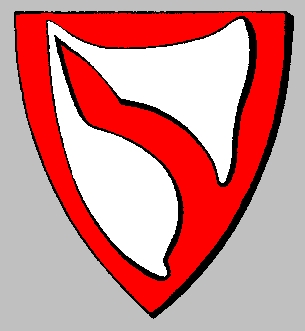 Sir Reynold
de MOHUN II123,127 was born about 1206 of Dunster, Somersetshire, England.209 He died on 20 Jan 1257/58 in
Torre Mohun, Devonshire, England.209,210,211,1038 He was buried in 1257 in
Priory Church, Newenham, Devonshire, England.211
Parents: Reynold de MOHUN and Alice BRIWERE.
Sir Reynold
de MOHUN II123,127 was born about 1206 of Dunster, Somersetshire, England.209 He died on 20 Jan 1257/58 in
Torre Mohun, Devonshire, England.209,210,211,1038 He was buried in 1257 in
Priory Church, Newenham, Devonshire, England.211
Parents: Reynold de MOHUN and Alice BRIWERE.Spouse: Hawise FITZPIERS. Sir Reynold de MOHUN II and Hawise FITZPIERS were married about 1227.209,679 Children were: Alice de MOHUN.
Hildouin IV MONTDIDIER Count of Montdidier and Roucy123,127,384 was born about 1010 in Montdidier, Somme, France. He died about 1062.422
REF MRL. Count and Seigneur de Rameru.
REF AR7. Seigneur of Rameru.
REF RGD. In this database, Hildouin III is the father of Felice de Rouci, and Hildouin of Montdidier is the fater of Beatrice de Montdidier who married Geoffrey de Perche.
Spouse: Alice de ROUCY. Hildouin IV MONTDIDIER Count of Montdidier and Roucy and Alice de ROUCY were married in 1031.422 Children were: Margaret de MONTDIDIER.
Margaret de MONTDIDIER123,127,384,422 was born about 1035 of Montdidier, Somme, France. Parents: Hildouin IV MONTDIDIER Count of Montdidier and Roucy and Alice de ROUCY.
Spouse: Hugh I CLERMONT Count of Clermont. Hugh I CLERMONT Count of Clermont and Margaret de MONTDIDIER were married in 1080 of Picardy, France.422 Children were: Adeliza de CLERMONT.
Anna MOORE1039,1040 was born in 1630 in , , , England.930 She died in 1691 in Billerica, Middlesex, Massachusetts, USA.175,930 Parents: Elder Francis MOORE and Catherine.
Spouse: . William UNDERWOOD and Anna MOORE were married on 17 Mar 1684 in Chelmsford, Middlesex, Massachusetts, USA.930
Spouse: James KIDDER. James KIDDER and Anna MOORE were married in 1649/50 in Cambridge, Middlesex, Massachusetts, USA.11 Children were: Hannah KIDDER, Dorothy KIDDER, James KIDDER, John KIDDER, Thomas KIDDER, Nathaniel KIDDER, Ephraim KIDDER, Stephen KIDDER, Enoch KIDDER, Deacon Samuel KIDDER, Sarah KIDDER, Joseph KIDDER.
Elizabeth MOORE was born about 1626.37 She died on 23 Aug 1705 in Framingham, Middlesex, Massachusetts, USA.37
Source: "The History of the Brigham Family" 2nd Vol. by Emma Elisabeth Brigham Parents: John MOORE and Elizabeth.
Spouse: Henry RICE. Henry RICE and Elizabeth MOORE were married on 1 Nov 1643 in Sudbury, Middlesex, Massachusetts, USA.11,37 Children were: Mary RICE, Elizabeth RICE, Jonathan RICE, Abigail RICE, David RICE, Thomasine RICE, Rachel RICE, Lydia RICE, Mercy RICE.
Elder Francis MOORE1041,1042 was born in 1586 in , , , England. He died on 20 Aug 1671 in Cambridge, Middlesex, Massachusetts, USA.667
Spouse: Catherine. Elder Francis MOORE and Catherine were married about 1620 in Cambridge, Middlesex, Massachusetts, USA.11 Says by 1620 but must have been earlier because of the age of first child. Children were: Francis MOORE, Samuel MOORE, Anna MOORE, Sarah MOORE, John MOORE, Thomas MOORE.
Spouse: . Elder Francis MOORE and Elizabeth PERIMAN were married on 6 Dec 1653 in Cambridge, Middlesex, Massachusetts, USA.11
Francis MOORE1043 was born about 1620 in , , , England. from death age and date He died on 23 Feb 1689 in Cambridge, Middlesex, Massachusetts, USA.22 He had his estate probated in 1689 in Cambridge, Middlesex, Massachusetts, USA.1040 His will mentions his brothers John & Thomas; Anna Eaton daughter of Daniel Eaton; and Nathaniel & Samuel Kidder.
A Yeoman Parents: Elder Francis MOORE and Catherine.
John MOORE1042,1044 was born in Apr 1592 in , , , England. He died on 6 Jan 1673/74 in Sudbury, Middlesex, Massachusetts, USA.1045,1046
Source: "The History of the Brigham Family" 2nd Vol. by Emma Elisabeth Brigham Came on the "Planter" in 1635
Spouse: Elizabeth. John MOORE and Elizabeth were married about 1625 in Henham, Essex, England.36,37 Children were: Elizabeth MOORE, John MOORE.
Spouse: . John MOORE and Elizabeth RICE were married on 27 Nov 1633 in Gaddesden, Hertfordshire, England.37,1047 Children were: Anna MOORE, Richard MOORE, William MOORE, Mary MOORE, Lydia MOORE, Jacob MOORE, Joseph MOORE, Benjamin MOORE, Elizabeth MOORE.
John MOORE was born about 1638 in Sudbury, Middlesex, Massachusetts, USA. He died on 23 Sep 1702 in Lancaster, Worcester, Massachusetts, USA. CHWIFE Parents: John MOORE and Elizabeth.
Spouse: . John MOORE and Ann SMITH were married on 16 Nov 1654.1044
Spouse: . John MOORE and Mary WHITCOMB were married on 23 Aug 1683.
John MOORE1043 was born on 20 Mar 1644/45 in Cambridge, Middlesex, Massachusetts, USA.90 He was christened in Cambridge, Middlesex, Massachusetts, USA. A taylor Parents: Elder Francis MOORE and Catherine.
Samuel MOORE was born about 1624 in , , , England. Parents: Elder Francis MOORE and Catherine.
Sarah MOORE was born on 3 Apr 1643 in Cambridge, Middlesex, Massachusetts, USA.90 Parents: Elder Francis MOORE and Catherine.
Thomas MOORE1043 was born about 1645 in Cambridge, Middlesex, Massachusetts, USA. He was a. A Marriner Parents: Elder Francis MOORE and Catherine.
Iseult de MORTIMER6 died before 4 Aug 1338.6
ISEULT DE MORTIMER, born say 1255-60. She married (1st) WALTER DE BALUN, Knt., of Great Marcle, Herefordshite, Eastington, Gloucestershire, and Arley, Staffordshire, and Great Cheverel, Wiltshire. He was born about 1225 (aged 50 in 1275). They had no issue. He was heir in 1275 to his older brother, John de Balun. He was summoned to serve against the Welsh in 1277 and 1282. In 1285 he leased the manor of Great Marcle to her brother, Edmund de Mortimer, Knt., for three years for £60 a year. In 1287 they likewise had the grant of the manor of Ailey, Staffordshire for the term of their lives from Edmund. SIR WALTER DE BALUN was living 1287. Parents: Roger de MORTIMER Knight and Maud de BREWES.
Spouse: Lord Hugh de AUDLEY Knight. Lord Hugh de AUDLEY Knight and Iseult de MORTIMER were married before 1292 in Wigmore, Hereford, England.6,155 Children were: Hugh de AUDLEY Earl of Gloucester.
Ralph de MORTIMER.6
Spouse: Gwladus Duu of WALES. Ralph de MORTIMER and Gwladus Duu of WALES were married. Children were: Roger de MORTIMER Knight.
Roger de MORTIMER Knight.6 Parents: Ralph de MORTIMER and Gwladus Duu of WALES.
Spouse: Maud de BREWES. Roger de MORTIMER Knight and Maud de BREWES were married. Children were: Iseult de MORTIMER.
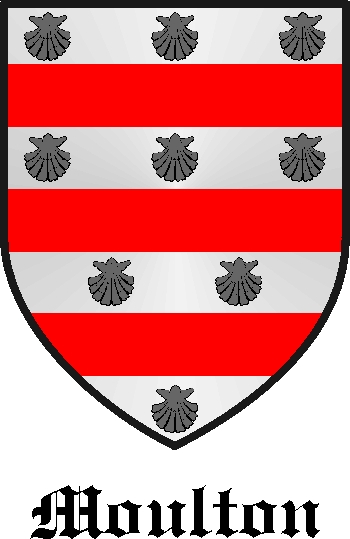 Cecily MOULTON228,298
was born in 1471. Parents: John
MOULTON.
Cecily MOULTON228,298
was born in 1471. Parents: John
MOULTON.Spouse: Humphrey BULKELEY. Children were: William BULKELEY.
John MOULTON.298
Children were: Cecily MOULTON.
Christiana MOWBRAY.206
Spouse: Sir William PLUMPTON. Sir William PLUMPTON and Christiana MOWBRAY were married. Children were: Alice PLUMPTON.
Joan MOWBRAY.6,311
Joan's ancestry to Henry II:
HENRY II, King of England, by a mistress, IDA _____
WILLIAM LONGESPEE, Knt., Earl of Salisbury, married ELA OF SALISBURY.
IDA LONGESPEE, married WILLIAM DE BEAUCHAMP, Knt., of Bedford, Bedfordsbire.
MAUD DE BEAUCHAMP, marned ROGER DE MOWBRAY, Knt., of Thirsk, Yorkshire.
ROGER DE MOWBRAY, Knt., lst Lord Mowbray, married ROSE DE CLARE.
JOHN DE MOWBRAY, Knt., 2nd Lord Mowbray, married ALLNE DE BREWES.
JOHN DE MOWBRAY, Knt., 3rd Lord Mowbray, married JOAN OF LANCASTER (desc. King Henry III).
JOHN DE MOWBRAY, Knt., 4th Lord Mowbray, married ELIZABETH DE SEGRAVE (desc. King Edward 1)
JOAN MOWBRAY Parents: John MOWBRAY 4th Baron Mowbray and Elizabeth de SEGRAVE.
Spouse: Sir Thomas GREY. Sir Thomas GREY and Joan MOWBRAY were married before 1384. Children were: Maud de GREY.
John MOWBRAY Knight6 was born on 4 Sep 1286 or 21 Nov 1286.6 He died on 23 Mar 1321 in Friars Preachers, York, Yorkshire, England.6
JOHN DE MOWBRAY, Knt., 2nd Lord Mowbray, Baron of Axholme, Linco]nshire, Baron of Thirsk, Yorkshire, Keeper of the City of York and of the whole county, Warden of the Marches towards Carlisle, Captain and Keeper of Newcastle-upon-Tyne and the county of Northumberland, Keeper of Scarborough and Malton Castles, Sheriff of York, son and heir, born 4 Sept. (or 21 Nov.) 1286. He married at Swansea, Glamorgan shortly after 29 Nov. 1297 ALINE DE BREWES (or BREUSE), daughter and co-heiress of William de Brewes, Knt., 2nd Lord Brewes, Baron of Bramber, Sussex, lord of Gower in Wales. She was born about 1289 (aged about 8 at her marriage). They had one son, John, Knt. Parents: Roger de MOWBRAY Knight and Roese (Rohesia) de CLARE.
Spouse: Aline de BREWES. John MOWBRAY Knight and Aline de BREWES were married after 29 Nov 1297 in Swansea, Glamorgan, Wales.6 Children were: John MOWBRAY Knight.
John MOWBRAY Knight6 was born on 29 Nov 1310 in Hovingham, Yorkshire, England.6 He died on 4 Oct 1361 in York, Yorkshire, England.6
JOHN DE MOWBRAY, Knt., 3td Lord Mowbray, Baron of Axholme, Linco]nsbire, Baron of Bramber, Sussex, lord of Gower in Wales, Keeper of Berwick-on-Tweed, son and heir, born at Hovingham, Yorkshire 29 Nov. 1310 and baptized there. As a child, he was affianced to marry MAUD DE HOLAND, daughter of Robert de Holand, Knt., jtt Lord Holand, by Maud, daughter and co-heiress of Alan la Zouche, Knt., Lord Zouche [see SAVAGE 8]. This marriage never took place. He was imprisoned in the Tower of London with his mother 26 Feb. 1321/2. He married between 28 Feb. 1326/7 and 4 June 1328 JOAN OF LANCASTER, 6th and youngest daughter of Henry ofLancaster, Knt., Earl of Lancaster (grandson of King Henry III), by Maud, daughter and heiress of Patrick de Chaworth, Knt. [see LANCASTER 6 for her ancestry]. They had one son, John, Knt. [4th Lord Mowbray] and two daughters, Blanche and Eleanor. On the accession of King Edward III, his father's attainder was reversed, and he had livery of all his father's lands, excepting those of the Templars. He was summoned to Parliament from 10 Dec. 1327 to 20 Nov. 1360. He served in the Scots and French wars. In 1333, while he was with the king's army at Berwick, a band of intruders raided the lordship of Gower and plundered some of his tenants. In 1337 two ships were provided for him going to Scotland. In 1338 he was ordered to take all his forces to Sussex to defend the coast. In 1342 he and his wife, Joan, received a papal indult for plenary remission. He was one of the commanders of the English Army at the Battle of Nevili's Cross, Durham 17 Oct. 1346. He was present at the siege of Calais in 1347. His wife, Joan, died 7 July [?1349], and was buried before the high altar at Byland. He is said to have taken part in the naval defeat of the Spaniards off Winchelsea in 1350. He married (2nd) before papal dispensation dated 4 May 1351 (they being related in the 4th and 3rd degrees of kindred) ELIZABETH DE VERE, widow of Hugh de Courtenay, K.G. (died before 2 Sept. 1349), and daughter of John de Vere, 7th Earl of Oxford, by Maud, daughter of Bartholomew de Badllesmere, Lord Badlesmere. They had no known surviving issue. In 1354 his title to Gower was contested by Thomas Beauchamp, Earl of Warwick in the Court of Common Pleas, which suit was decided in Warwick's favor. In 1356 he witnessed the surrender by Baliol of his claim to the Scottish crown in favor of Edward. SIR JOHN DE MOWBRAY, 3rd Lord Mowbray, died of pestilence at York 4 Oct. 1361, and was buried at the church of Friars Minor, Bedford. His widow, Elizabeth, married (3rd) before 18 Jan. 1368/9 William de Cossington, Knt. (living 6 July 1380), son and heir of Stephen de Cossington, of Cosynton (in Aylesford) and Acrise, Kent. She died 16 August 1375. Parents: John MOWBRAY Knight and Aline de BREWES.
Spouse: Joan LANCASTER. John MOWBRAY Knight and Joan LANCASTER were married bet 28 Feb 1326/7 and 4 June 1328.6 Children were: John MOWBRAY 4th Baron Mowbray.
John MOWBRAY 4th Baron Mowbray6,311 was born on 25 Jun 1340 in Epwoth, Lincolnshire, England.6 He died on 17 Jun 1368 in Thrace near Constantinople.6
JOHN DE MOWBRAY, Knt., 4th Lord Mowbray, of Axholme, Lincolnsbire, son and heir, born at Epworth, Lincolnshire 25 June 1340. He married by papal dispensation dated 25 March 1349 (they being related in the 4th degree of kindred) ELIZABETH DE SEGRAVE, Lady Segrave suojure, daughter and heiress of John de Segrave, Knt., 4th Lord Segrave, of Barton Segrave, Leicestersbire, Bretby, Derbyshire, etc. (descendant of King John), by Margaret, Duchess and Countess of Norfolk, daughter and co-heiress of Thomas of Brotherton, Knt., Earl of Norfolk, Marshal of England (son of King Edward I') [see NORFOLK 7 for her ancestry]. She was born 25 Oct. 1338, and baptized the same day at Croxton Abbey. They had two sons, John [5th Lord Mowbray] and Thomas, Knt., K.G. [6th Lord Mowbray, 1st Duke of Norfolk, etc.], and three daughters, Eleanor, Margaret, and Joan. In 1351 his wife, Elizabeth, then a resident of Norwich diocese, received a papal indult for plenary reimssion. She is said to have become ruo jure Lady Segrave, on the death of her father, Sir John de Segrave, 1 April 1353. He was knighted in July 1355 when the King was with his fleet in the Downs on his way to an invasion of France. Next year he served in the Brittany campaign. He was summoned to Parliament from 14 August 1362 to 20 Jan. 1365/6. In 1367 he was going beyond seas by the King's license. SIR JOHN DE MOWBRAY, 4th Lord Mowbray, was slain by the Turks in Thrace near Constantinople 17 June 1368, and was presumably buried in Pera convent in Constantinople. His wife, Elizabeth, predeceased him. Parents: John MOWBRAY Knight and Joan LANCASTER.
Spouse: Elizabeth de SEGRAVE. John MOWBRAY 4th Baron Mowbray and Elizabeth de SEGRAVE were married on 25 Mar 1349.6 Children were: Joan MOWBRAY.
Roger MOWBRAY.6
MAUD DE BEAUCHAMP, eldest daughter. She married (1st) (as his 2nd wife) before 1257 ROGER DE MOWBRAY, Knt., Baron of Thirsk, Yorkshire, younger son of William de Mowbray, Baron of Thirsk, Yorkshire, by his wife, Avice. He was born about 1220 (came of age in 1241), and was heir in 1230 to his older brother, Nele (or Nigel) de Mowbray. They had one son, Roger, Krnt. [itt Lord Mowbray). He married (1st) after 13 April 1238 (date of grant of marriage) _____ DE FURNIVAL, eldest daughter of Thomas de Furnival, of Worksop, Nottinghamshire, and Sheffield, Yorkshire, by Bertha, daughter of William de Ferrers, Earl of Chester, by which marriage he had two daughters, Joan (wife of Robert de Mohaut), and Elizabeth (or Isabel) (wife of Adam de Newmarch). He had the grant of a market and fair at Hovingham, Yorkshire in 1252. He was summoned for service in Scotland in 1258, and for service against the Welsh in 1260. He appears to have sided with King Henry III in the earlier days of the opposition of the Barons. SIR ROGER DE MOWBRAY died shortly before 18 Oct. 1263 and was buried at Black Friars, Pontefract. His widow, Maud, was co-heiress c.1266-7, to her niece, Joan, daughter of Simon de Beauchamp, Knt., by which she inherited a one-third share of the barony of Bedford, co. Beauchamp. She had restitution of Bedford Castle in 1267. She married (2nd) (as his itt wife) before 15 July 1270 (date of bond) Roger le Strange, of Ellesmere, Shropshire, steward of the Household, Justice of the Forest south of Trent, bailiff of the honour of Pec, Derbyshire, Sheriff of Yorkshire, Constable of Chartley, Oswestry, and Welshpool Castles, younger son of John le Strange, of Knockin, Shropshire, by Lucy, daughter of Robert de Tregoz. They had issue. She died shortly before 4 April 1273 and was buried with her 1st husband. He married (2nd) Maud _____. In 1288 he was commander of an expedition against Rhys ap Maredudd. He was King's messenger at the Court of Rome in 1291-2. He was summoned to Parliament from 24 June 1295 till 26 August 1296 by writs directed Rogero Extraneo, whereby he is held to have become Lord Strange. He signed the Barons' letter to Pope Boniface in 1301 as “Dominus de Ellesmere.” Roger le Strange, Lord Strange, died 31 July 1311.
Spouse: Maud de BEAUCHAMP. Roger MOWBRAY and Maud de BEAUCHAMP were married. Children were: Roger de MOWBRAY Knight.
Roger de MOWBRAY Knight6 was born in 1257. He died before 21 Nov 1297 in Ghent, Flanders, Belgium.
ROGER DE MOWBRAY, Knt., Baron of Thirsk, Yorkshire, son and heir, born about 1257 (came of age in 1278). He married shortly after 15 July 1270 (date of bond for payments in respect of their marriage) ROSE DE CLARE, daughter of Richard de Clare, Earl of Gloucester and Hertford, Baron of Clare, Suffolk, by his 2nd wife, Maud, daughter of John de Lacy, Earl of Lincoln, Magna Carta Surety. She was born in or after 1255 (under 15 years of age in July 1270). They had two sons, John, Knt. [2nd Lord Mowbray], and Alexander. He was summoned for military service against the Welsh in 1282 and 1283, and against the Scots in 1291. In 1294 he was going on the King's service to Gascony. He was summoned to Parliament 24 June 1295 (and again 26 August 1296) by writ directed Rogero de Mubrqy, whereby he is held to have become Lord Mowbray. In 1296 he obtained a charter of free warren in his demesne lands at Thirsk and Hovingham. SIR ROGER DE MOWBRAY, 1st Lord Mowbray, died at Ghent in Flanders shortly before 21 Nov. 1297, and was buried at Fountains Abbey. His widow, Rose, was living in Hilary term, 1316. Parents: Roger MOWBRAY and Maud de BEAUCHAMP.
Spouse: Roese (Rohesia) de CLARE. Roger de MOWBRAY Knight and Roese (Rohesia) de CLARE were married after 15 Jul 1270. Children were: John MOWBRAY Knight.
Alice MUNTER was christened on 13 Apr 1609 in St Mary the Virgen, Dover, Kent, England.1048 Parents: Phineas MUNTER and Katherine.
Elizabeth MUNTER was christened on 27 Jan 1590/91 in St Mary the Virgen, Dover, Kent, England.1049 Parents: Phineas MUNTER and Katherine.
Elizabeth MUNTER was christened on 17 Feb 1595/96 in St Mary the Virgen, Dover, Kent, England.1049 Parents: Phineas MUNTER and Katherine.
Jeane MUNTER was christened on 1 Apr 1593 in St Mary the Virgen, Dover, Kent, England.1049 She was buried in Apr 1593 in St Mary the Virgen, Dover, Kent, England.1049 Parents: Phineas MUNTER and Katherine.
Jeane MUNTER was christened on 23 May 1599 in St Mary the Virgen, Dover, Kent, England.1048 Parents: Phineas MUNTER and Katherine.
Spouse: . John OSBORNE and Jeane MUNTER were married on 6 Mar 1621/22 in , Canterbury, Kent, England.1048
Kathren MUNTER was christened on 27 Apr 1602 in St Mary the Virgen, Dover, Kent, England.1048 She was buried on 8 Sep 1603 in St Mary the Virgen, Dover, Kent, England.1048 Parents: Phineas MUNTER and Katherine.
Nicholas MUNTER was christened on 2 Nov 1606 in St Mary the Virgen, Dover, Kent, England.1048 Parents: Phineas MUNTER and Katherine.
Phineas MUNTER was christened on 29 Dec 1603 in St Mary the Virgen, Dover, Kent, England.1048 Parents: Phineas MUNTER and Katherine.
Spouse: . Phineas MUNTER and Ann RAWLINGS were married on 21 Sep 1629 in , Canterbury, Kent, England.1048
Phineas MUNTER was christened on 23 Feb 1566/67 in St Mary the Virgen, Dover, Kent, England.72 He died about Sep 1620 in Buckland, Kent, England. He was buried in Buckland, Kent, England.
PHINEAS MUNTER of Dover, Kent, England, is the first of the name found in the records of Kent. The name is probably Dutch and means minter or coin maker. It eventually became Anglicized and was spelled as Mynter or Minter, especially in later generations. He was probably the son or grandson of Dutch immigrants to Dover. A John Mynter, "from the domain of the emperor ‘,i.e., the Franco-German empire, was naturalized 16 September 1549 (Patent Rolls). This might have been the father of Phineas. Where in England John lived is not stated. This is the earliest instance of the name so far found in England. Or possibly this was the John Mynter of Saint Saviour's in Southwark, Surrey, who died in May or June 1585 leaving a wife Margery, but no children mentioned in his will.
Phineas was baptized 23 February 1566/7 in the church of Saint Mary the Virgin, Dover, his parents not named.
Also in the records of this church is the marriage of Elizabeth Munter to Edward Powell on 6 October 1584. Six children were born to them between 1585 and 1595. Perhaps she was an elder sister to Phineas. The Henry Munter who married Sarah Baker on 10 January 1582/3 at nearby Folkestone, was perhaps his brother. Katherine, wife of Phineas Munter, was buried 13 April 1605 at Saint Mary's in Dover. Exactly two weeks later, on 27 April, he remarried to the widow Elizabeth Johnson, also of Dover. Then a month later, on 27 May, their marriage was recorded again at Saint Paul s in Canterbury. In this last record he is listed as a blacksmith.
In 1615 the Munters were living in Faversham which is 8 miles west of Canterbury, for: 16 May 1615 Elizabeth Munter wife of Phineas Munter, lately of Dover now of Faversham, Plaintiff vs. Christian Barnacle wife of Henry Barnacle of Dover, defendant defamation. (Cathedral & Archives Library J/J 19/135)
From Faversham Phineas moved to Buckland which is less than two miles northwest of Dover. Here he died and was buried 9 September 1620. On 15 November following letters of administration were issued to his widow. His inventory follows.
A true Inventory of the goods of Finnis Munter, blacksmith, of the parish of Buckland, lately deceased.
In prixnis - his purse, his girdle and his gloves -
all his wearing apparel
a table
a pair of andirons
a bedstead
a featherbed, two coverlets and a blanket, two bolsters and a piilow
a chest and a court cupboard
two hammers and three pair of tongs, and other working tools
a pair 0f bellows and a anvil and a beakhorn which he sold some two months before he deceased and left to receive of the money. - -
six pieces of pewter, three platters and three pewter dishes
3 pair of sheets and a table cloth and 4 napkins two pewter candlesticks and a pewter pot, two salts and a porringer
a brass kettle, a stew pan and a warming pan -
a frying pan and a gridiron
all other lumber
Sum is £5. 13s. 8d.
The appraisers: Robert Hatten, John Hatcher This same inventory of the goods was made and exhibited by Elizabeth, relict of the aforesaid deceased. Bond with same and John Ray of Canterbury, Carpenter, - £10.
Spouse: Katherine. Phineas MUNTER and Katherine were married in , , , England. Children were: Elizabeth MUNTER, Jeane MUNTER, Elizabeth MUNTER, Susan MUNTTER, Jeane MUNTER, Thomas MUNTER, Kathren MUNTER, Phineas MUNTER, Nicholas MUNTER, Alice MUNTER.
Thomas MUNTER was christened on 5 Oct 1600 in St Mary the Virgen, Dover, Kent, England.1048 He was buried on 1 Jul 1602 in St Mary the Virgen, Dover, Kent, England.1048 Parents: Phineas MUNTER and Katherine.
Susan MUNTTER was born in 1597 in Canterbury, Kent, England.166 She was christened on 5 Oct 1597 in Dover, St Mary's, Kent, England. She died on 7 Mar 1689 in Woburn, Middlesex, Massachusetts, USA.166,908 She signed a will on 14 Dec 1689 in Woburn, Middlesex, Massachusetts, USA.908
Extracted from Christening records Parents: Phineas MUNTER and Katherine.
Spouse: Capt. Edward JOHNSON. Capt. Edward JOHNSON and Susan MUNTTER were married about 1618 in , , Kent, England.166,906,907 Children were: Edward JOHNSON, William JOHNSON, George JOHNSON, Susanna JOHNSON, William JOHNSON, Martha JOHNSON, Matthew JOHNSON, John JOHNSON.
Blanche of NAVARRE183,335 was born after 1133. She died on 12 Aug 1156.185
Spouse: Sancho III King of CASTILE. Sancho III King of CASTILE and Blanche of NAVARRE were married on 30 Jan 1151 in Calahorra, Spain.185 Children were: Alfonso VIII King of CASTILE.
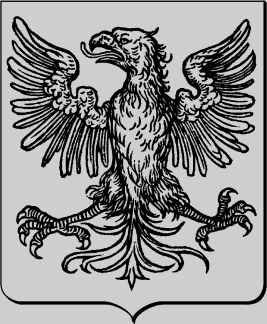 Sancho Garcie
III "the Great" King of NAVARRE, CASTILE AND ARAGON139,336 was born
between 990 and 992.337
He died on 18 Oct 1035 in Bureba, Spain.337
He was buried in St. Salvador de Ona, Spain.
Sancho Garcie
III "the Great" King of NAVARRE, CASTILE AND ARAGON139,336 was born
between 990 and 992.337
He died on 18 Oct 1035 in Bureba, Spain.337
He was buried in St. Salvador de Ona, Spain.Spouse: Nuna (Munia Mayor) of CASTILE. Sancho Garcie III "the Great" King of NAVARRE, CASTILE AND ARAGON and Nuna (Munia Mayor) of CASTILE were married in 1010.337 Children were: Fernando I the Great King of LEÓN & CASTILE.
Spouse: Sancha de AYBAR. Sancho Garcie III "the Great" King of NAVARRE, CASTILE AND ARAGON and Sancha de AYBAR were married. Children were: Ramiro I de ARAGON King of Aragon.
Agnes NEVES was born in 1563 in , Lavenham, Suffolk, England. She died on 8 Oct 1645 in , Lavenham, Suffolk, England. She was buried on 8 Oct 1645 in , Lavenham, Suffolk, England.
Given name may be Ann
Spouse: William PAINE. William PAINE and Agnes NEVES were married on 28 Dec 1584 in , Lavenham, Suffolk, England.1050 Children were: Elizabeth PAINE, Anne PAYNE, Judith PAYNE, Susan PAYNE, Susan PAYNE, Jane PAYNE, Phoebe PAINE, Richard PAYNE, William PAINE, Dorothy PAINE, Francis PAINE.
Eleanor NEVILLE.6
Spouse: Ralph LUMLEY Knight. Ralph LUMLEY Knight and Eleanor NEVILLE were married. Children were: Elizabeth LUMLEY.
Eleanor NEWTON1051 was born in 1598 in Marshfield, Plymouth, Massachusetts, USA.1052 She died on 5 Dec 1681 in Marshfield, Plymouth, Massachusetts, USA.1052,1053 She was buried on 7 Dec 1681 in Marshfield, Plymouth, Massachusetts, USA.
In the 1623 Plymouth land division, Ellen Newton was granted one acre as a passenger on the Anne in 1623 [PCR 12:6].
COMMENTS: Before 1627 she had married JOHN ADAMS of Plymouth, and after his death in 1633 she married KENELM WINSLOW.
Spouse: . John ADAMS and Eleanor NEWTON were married about 1625 in Plymouth, Plymouth, Massachusetts, USA.1054,1055
Spouse: Kenelm WINSLOW. Kenelm WINSLOW and Eleanor NEWTON were married in Jun 1634 in Plymouth, Plymouth, Massachusetts, USA.11,1054,1056 Children were: Kenelm WINSLOW, Ellen WINSLOW, Nathanial WINSLOW, Job WINSLOW.
Margaret NORMAN was born about 1529 in Little Horsted, Sussex, England. She died in 1569 of Little Horsted, Sussex, England.83,935
Spouse: John KIDDER. John KIDDER and Margaret NORMAN were married. Children were: John KIDDER.
Adbelahide de NORMANDIE46 was born about 1027 in of, , Normandie, France. She died before 1090. Parents: Robert I "The Magnificent" Duke of NORMANDY and Harlette de FALAISE.
Adelais (Judith) de NORMANDIE46 was born about 1007 in of, , Normandie. She died 7 Or 1037 Aft Jul 27 in , , , France. Parents: Richard II "The Good" Duke of NORMANDY and Judith de BRETAGNE.
Bbeatrice de NORMANDIE46 was born about 987 in , of, Normandie. Parents: Richard I "Sans Peur" Duke of NORMANDY and Gonnor de CREPON.
Elbeonore de NORMANDIE46 was born about 1009 in of, , Normandie. Parents: Richard II "The Good" Duke of NORMANDY and Judith de BRETAGNE.
Guillaume de NORMANDIE46 was born in 1005 of Normandie, France. He died in Jun 1025. Parents: Richard II "The Good" Duke of NORMANDY and Judith de BRETAGNE.
 Guillaume
I "Le Conquberant" de NORMANDIE46,47,131,543,544,1057 was born on 14 Oct 1024 in
Falaise, Normandy, France.547
He was christened in 1066 in Norman Conquest, As An Adult;. He was
Crowned on 25 Dec 1066 at Westminster Abbey, London, England541,546,547 He died on 9 Sep 1087 in Hermentrube, Near Rouen,
France.546,549 He was buried in Abbaye De St Etienne, Caen, Normandie.
Guillaume
I "Le Conquberant" de NORMANDIE46,47,131,543,544,1057 was born on 14 Oct 1024 in
Falaise, Normandy, France.547
He was christened in 1066 in Norman Conquest, As An Adult;. He was
Crowned on 25 Dec 1066 at Westminster Abbey, London, England541,546,547 He died on 9 Sep 1087 in Hermentrube, Near Rouen,
France.546,549 He was buried in Abbaye De St Etienne, Caen, Normandie.
Dickens, Charles
Chapter VIII. England Under William The First, The Norman Conqueror.
Upon the ground where the brave Harold fell, William the Norman afterwards founded an abbey, which, under the name of Battle Abbey, was a rich and splendid place through many a troubled year, though now it is a gray ruin overgrown with ivy. But the first work he had to do was to conquer the English thoroughly; and that, as you know by this time, was hard work for any man.
He ravaged several counties; he burned and plundered many towns; he laid waste scores upon scores of miles of pleasant country; he destroyed innumerable lives. At length Stigand, Archbishop of Canterbury, with other representatives of the clergy and the people, went to his camp, and submitted to him. Edgar, the insignificant son of Edmund Ironside, was proclaimed king by others, but nothing came of it. He fled to Scotland afterwards, where his sister, who was young and beautiful, married the Scottish king. Edgar himself was not important enough for anybody to care much about him.
On Christmas Day, William was crowned in Westminster Abbey, under the title of William the First; but he is best known as William the Conqueror. It was a strange coronation. One of the bishops who performed the ceremony asked the Normans, in French, if they would have Duke William for their king. They answered, Yes. Another of the bishops put the same question to the Saxons, in English. They, too, answered Yes, with a loud shout. The noise, being heard by a guard of Norman horse-soldiers outside, was mistaken for resistance on the part of the English. The guard instantly set fire to the neighboring houses, and a tumult ensued, in the midst of which the king, being left alone in the abbey with a few priests (and they all being in a terrible fright together), was hurriedly crowned. When the crown was placed upon his head, he swore to govern the English as well as the best of their own monarchs. I daresay you think, as I do, that, if we except the Great Alfred, he might pretty easily have done that.
Numbers of the English nobles had been killed in the last disastrous battle. Their estates, and the estates of all the nobles who had fought against him there, King William seized upon, and gave to his own Norman knights and nobles. Many great English families of the present time acquired their English lands in this way, and are very proud of it.
But what is got by force must be maintained by force. These nobles were obliged to build castles all over England, to defend their new property; and, do what he would, the king could neither soothe nor quell the nation as he wished. He gradually introduced the Norman language and the Norman customs; yet, for a long time, the great body of the English remained sullen and revengeful. On his going over to Normandy, to visit his subjects there, the oppressions of his half-brother Odo, whom he left in charge of his English kingdom, drove the people mad. The men of Kent even invited over, to take possession of Dover, their old enemy, Count Eustace of Boulogne, who had led the fray when the Dover man was slain at his own fireside. The men of Pereford, aided by the Welsh, and commanded by a chief named Edric the Wild, drove the Normans out of their country. Some of those who had been dispossessed of their lands banded together in the North of England, some in Scotland, some in the thick woods and marshes; and whensoever they could fall upon the Normans, or upon the English who had submitted to the Normans, they fought, despoiled, and murdered, like the desperate outlaws that they were. Conspiracies were set on foot for a general massacre of the Normans, like the old massacre of the Danes. In short, the English were in a murderous mood all through the kingdom.
King William, fearing he might lose his conquest, came back and tried to pacify the London people by soft words. He then set forth to repress the country people by stern deeds. Among the towns which he besieged, and where he killed and maimed the inhabitants without any distinction, sparing none, young or old, armed or unarmed, were Oxford, Warwick, Leicester, Nottingham, Derby, Lincoln, York. In all these places, and in many others, fire and sword worked their utmost horrors, and made the land dreadful to behold. The streams and rivers were discolored with blood; the sky was blackened with smoke; the fields were wastes of ashes; the waysides were heaped up with dead. Such are the fatal results of conquest and ambition! Although William was a harsh and angry man, I do not suppose that he deliberately meant to work this shocking ruin, when he invaded England. But what he had got by the strong hand, he could only keep by the strong hand; and in so doing he made England a great grave.
Two sons of Harold, by name Edmund and Godwin, came over from Ireland with some ships against the Normans, but were defeated. This was scarcely done, when the outlaws in the woods so harassed York, that the governor sent to the king for help. The king despatched a general and a large force to occupy the town of Durham. The bishop of that place met the general outside the town, and warned him not to enter, as he would be in danger there. The general cared nothing for the warning, and went in with all his men. That night, on every hill within sight of Durham, signal-fires were seen to blaze. When the morning dawned, the English, who had assembled in great strength, forced the gates, rushed into the town, and slew the Normans every one. The English afterwards besought the Danes to come and help them. The Danes came with two hundred and forty ships. The outlawed nobles joined them; they captured York, and drove the Normans out of that city. Then William bribed the Danes to go away, and took such vengeance on the English, that all the former fire and sword, smoke and ashes, death and ruin, were nothing compared with it. In melancholy songs and doleful stories, it was still sung and told by cottage-fires, on winter evenings a hundred years afterwards, how, in those dreadful days of the Normans, there was not, from the River Humber to the River Tyne, one inhabited village left, nor one cultivated field, - how there was nothing but a dismal ruin, where the human creatures and the beasts lay dead together.
The outlaws had, at this time, what they called a Camp of Refuge, in the midst of the fens of Cambridgeshire. Protected by those marshy grounds, which were difficult of approach, they lay among the reeds and rushes, and were hidden by the mists that rose up from the watery earth. Now there also was at that time, over the sea in Flanders, an Englishman named Hereward, whose father had died in his absence, and whose property had been given to a Norman. When he heard of this wrong that had been done him (from such of the exiled English as chanced to wander into that country), he longed for revenge; and joining the outlaws in their camp of refuge, became their commander. He was so good a soldier, that the Normans supposed him to be aided by enchantment. William, even after he had made a road three miles in length across the Cambridgeshire marshes, on purpose to attack this supposed enchanter, thought it necessary to engage an old lady who pretended to be a sorceress, to come and do a little enchantment in the royal cause. For this purpose she was pushed on before the troops in a wooden tower; but Hereward very soon disposed of this unfortunate sorceress, by burning her, tower and all.
The monks of the convent of Ely, near at hand, however, who were fond of good living, and who found it very uncomfortable to have the country blockaded, and their supplies of meat and drink cut off, showed the king a secret way of surprising the camp. So Hereward was soon defeated. Whether he afterwards died quietly, or whether he was killed after killing sixteen of the men who attacked him (as some old rhymes relate that he did), I cannot say. His defeat put an end to the Camp of Refuge; and, very soon afterwards, the king, victorious both in Scotland and in England, quelled the last rebellious English noble. He then surrounded himself with Norman lords, enriched by the property of English nobles; had a great survey made of all the land in England, which was entered as the property of its new owners, on a roll called Doomsday Book; obliged the people to put out their fires and candles at a certain hour every night, on the ringing of a bell which was called The Curfew; introduced the Norman dresses and manners; made the Normans masters everywhere, and the English servants; turned out the English bishops, and put Normans in their places; and showed himself to be the Conqueror indeed.
But, even with his own Normans, he had a restless life. They were always hungering and thirsting for the riches of the English; and the more he gave, the more they wanted. His priests were as greedy as his soldiers. We know of only one Norman who plainly told his master the king, that he had come with him to England to do his duty as a faithful servant, and that property taken by force from other men had no charms for him. His name was Guilbert. We should not forget his name; for it is good to remember and to honor honest men.
Besides all these troubles, William the Conqueror was troubled by quarrels among his sons. He had three living. Robert, called Curthose, because of his short legs; William, called Rufus, or the Red, from the color of his hair; and Henry, fond of learning, and called, in the Norman language, Beauclerc, or Fine-Scholar. When Robert grew up, he asked of his father the government of Normandy, which he had nominally possessed, as a child, under his mother Matilda. The king refusing to grant it, Robert became jealous and discontented; and happening one day, while in this temper, to be ridiculed by his brothers, who threw water on him from a balcony as he was walking before the door, he drew his sword, rushed up stairs, and was only prevented by the king himself from putting them to death. That same night, he hotly departed with some followers from his father's court, and endeavored to take the Castle of Rouen by surprise. Failing in this, he shut himself up in another castle in Normandy, which the king besieged, and where Robert one day unhorsed and nearly killed him without knowing who he was. His submission when he discovered his father, and the intercession of the queen and others, reconciled them, but not soundly; for Robert soon strayed abroad, and went from court to court with his complaints. He was a gay, careless, thoughtless fellow, spending all he got on musicians and dancers; but his mother loved him, and often, against the king's command, supplied him with money through a messenger named Samson. At length the incensed king swore he would tear out Samson's eyes; and Samson, thinking that his only hope of safety was in becoming a monk, became one, went on such errands no more, and kept his eyes in his head.
All this time, from the turbulent day of his strange coronation, the Conqueror had been struggling, you see, at any cost of cruelty and bloodshed, to maintain what he had seized. All his reign he struggled still, with the same object ever before him. He was a stern, bold man, and he succeeded in it.
He loved money, and was particular in his eating; but he had only leisure to indulge one other passion, and that was his love of hunting. He carried it to such a height, that he ordered whole villages and towns to be swept away to make forests for the deer. Not satisfied with sixty-eight royal forests, he laid waste an immense district to form another in Hampshire, called the New Forest. The many thousands of miserable peasants who saw their little houses pulled down, and themselves and children turned into the open country without a shelter, detested him for his merciless addition to their many sufferings; and when in the twenty-first year of his reign (which proved to be the last), he went over to Rouen, England was as full of hatred against him as if every leaf on every tree in all his royal forests had been a curse upon his head. In the New Forest, his son Richard (for he had four sons) had been gored to death by a stag; and the people said that this so cruelly made forest would yet be fatal to others of the Conqueror's race.
He was engaged in a dispute with the king of France about some territory. While he stayed at Rouen, negotiating with that king, he kept his bed and took medicines; being advised by his physicians to do so, on account of having grown to an unwieldy size. Word being brought to him that the king of France made light of this, and joked about it, he swore in a great rage that he should rue his jests. He assembled his army, marched into the disputed territory, burnt - his old way! - the vines, the crops and fruit, and set the town of Nantes on fire. But in an evil hour; for, as he rode over the hot ruins, his horse, setting his hoofs upon some burning embers, started, threw him forward against the pommel of the saddle, and gave him a mortal hurt. For six weeks he lay dying in a monastery near Rouen, and then made his will, giving England to William, Normandy to Robert, and five thousand pounds to Henry. And now his violent deeds lay heavy on his mind. He ordered money to be given to many English churches and monasteries, and - which was much better repentance - released his prisoners of state, some of whom had been confined in his dungeons twenty years
It was a September morning, and the sun was rising, when the king was awakened from slumber by the sound of a church-bell. "What bell is that?" he faintly asked. They told him it was the bell of the chapel of Saint Mary. "I commend my soul," said he, "to Mary!" and died.
Think of his name, The Conqueror, and then consider how he lay in death! The moment he was dead, his physicians, priests, and nobles, not knowing what contest for the throne might now take place, or what might happen in it, hastened away, each man for himself and his own property; the mercenary servants of the court began to rob and plunder; the body of the king, in the indecent strife, was rolled from the bed, and lay alone for hours upon the ground. O Conqueror! of whom so many great names are proud now, of whom so many great names thought nothing then, it were better to have conquered one true heart than England!
By and by the priests came creeping in with prayers and candles; and a good knight, named Herluin, undertook (which no one else would do) to convey the body to Caen, in Normandy, in order that it might be buried in St. Stephen's Church there, which the Conqueror had founded. But fire, of which he had made such bad use in his life, seemed to follow him of itself in death. A great conflagration broke out in the town when the body was placed in the church; and those present running out to extinguish the flames, it was once again left alone.
It was not even buried in peace. It was about to be let down in its royal robes into a tomb near the high altar, in presence of a great concourse of people, when a loud voice in the crowd cried out, "This ground is mine! Upon it stood my father's house. This king despoiled me of both ground and house to build this church. In the great name of God, I here forbid this body to be covered with the earth that is my right!" The priests and bishops present, knowing the speaker's right, and knowing that the king had often denied him justice, paid him down sixty shillings for the grave. Even then the corpse was not at rest. The tomb was too small, and they tried to force it in. It broke, a dreadful smell arose, the people hurried out into the air, and for the third time it was left alone.
Where were the Conqueror's three sons, that they were not at their father's burial? Robert was lounging among minstrels, dancers, and gamesters in France or Germany. Henry was carrying his five thousand pounds safely away in a convenient chest he had got made. William the Red was hurrying to England to lay his hands upon the royal treasure and the crown.
Copyright © 1994 Bureau of Electronic Publishing
Parents: Robert I "The Magnificent" Duke of NORMANDY and Harlette de FALAISE.
Spouse: Matilda Countess of Flanders Queen of ENGLAND. Guillaume I "Le Conquberant" de NORMANDIE and Matilda Countess of Flanders Queen of ENGLAND were married in 1053 in Cathedral of Notre Dame d'Eu, Normandy, France.547,549 Children were: Cecilia Princess of ENGLAND, Agatha Princess of ENGLAND, William II "Rufus" King of ENGLAND, Alice Or Adbelahide de NORMANDY, Robert II Prince of ENGLAND, Richard Prince of ENGLAND, Constance Princess of ENGLAND, Adaele (Alice) Princess of ENGLAND, Mathilda Princess of ENGLAND, Henry I "Beauclerc" King of ENGLAND, Gundred Princess of ENGLAND.
Havoise de NORMANDIE46 was born about 977 in of, , Normandie. She died on 21 Feb 1034. She was buried in , Rennes, Bretagne. Parents: Richard I "Sans Peur" Duke of NORMANDY and Gonnor de CREPON.
Mahaud de NORMANDIE46 was born about 974 in of, Normandie, France. She died before 1017. Parents: Richard I "Sans Peur" Duke of NORMANDY and Gonnor de CREPON.

